


The answer to the question which doctor should be consulted for menopause is the Department of Obstetrics and Gynecology. People experiencing menopause symptoms, menstrual irregularities, vaginal dryness, suspected early menopause, or postmenopausal bleeding may consult an obstetrician and gynecologist. Doctors in this specialty are also referred to as gynecologists. If other health conditions are present, specialists from other medical departments may also take part in the evaluation.
Which Department Treats Menopause?
The department that should be selected in a hospital or appointment system is Obstetrics and Gynecology. For the question “Which doctor treats menopause?,” the terms obstetrician and gynecologist or gynecologist refer to the same medical specialty.
For searches such as “Which department treats menopause?,” it should be known that there is no separate primary medical specialty named menopause. Menstrual changes, vaginal symptoms, and gynecological check-ups during menopause are evaluated within the field of obstetrics and gynecology. An obstetrician and gynecologist experienced in menopause can determine whether the symptoms are consistent with the menopausal transition and whether further examination is needed.
The commonly used expression menopause doctor generally refers to an obstetrician and gynecologist who evaluates patients during menopause.
What Is Evaluated During a Menopause Examination?
A menopause examination does not consist only of a gynecological examination. During the first consultation, the person’s menstrual history, symptoms, and general health condition are evaluated in detail.
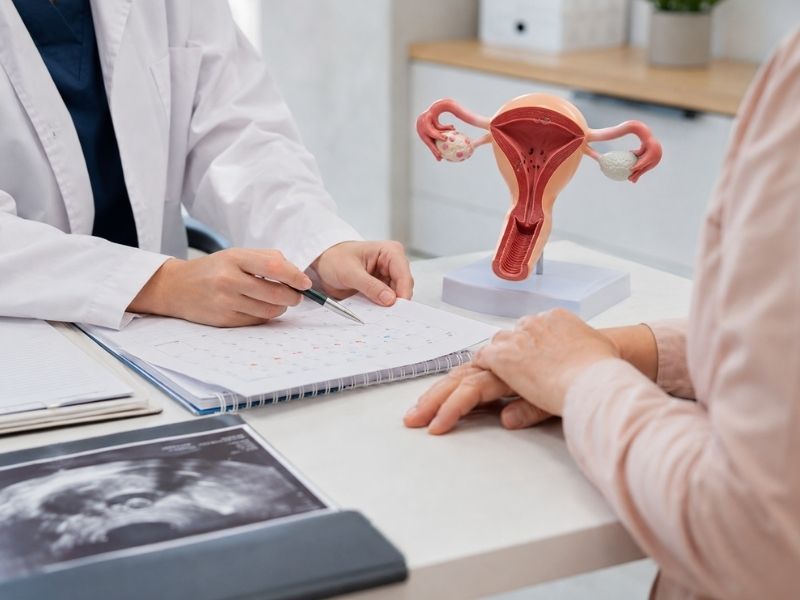
The following information is generally discussed during the consultation:
-
Age and date of the last menstrual period
-
Menstrual pattern during the past 6–12 months
-
Changes in the amount and duration of bleeding
-
When the symptoms began
-
Changes in sleep and mood
-
Vaginal and urinary symptoms
-
Medications being used
-
Birth control method
-
Previous uterine or ovarian surgeries
-
Family history of early menopause
During a menopause check-up, the same tests are not required for every person. Blood tests, ultrasound, or other examinations are planned according to age, menstrual pattern, symptoms, and accompanying health conditions.
May Other Doctors Be Needed During Menopause?
A gynecologist for menopause is the primary point of consultation. However, not every health problem that occurs during menopause is related only to obstetrics and gynecology.
Depending on the accompanying condition, evaluation by the following specialties may be required:
| Primary Health Concern | Specialty That May Be Involved in the Evaluation |
|---|---|
| Thyroid disorder or significant hormonal imbalance | Endocrinology |
| Diabetes, high blood pressure, or high cholesterol | Internal Medicine |
| Persistent palpitations or chest-related symptoms | Cardiology |
| Significant bone loss | Endocrinology or Physical Medicine and Rehabilitation |
| Persistent depressive symptoms or severe anxiety | Psychiatry |
| Urinary incontinence and bladder problems | Urology or the relevant field of obstetrics and gynecology |
Endocrinology during menopause is not the first department that every woman needs to consult directly. The initial evaluation is generally carried out by an obstetrician and gynecologist. If a different hormonal or metabolic disorder is suspected, endocrinology may be included in the process.
What Should Be Prepared Before a Menopause Appointment?
Making brief notes about symptoms and the menstrual pattern before the appointment may help the consultation proceed more efficiently. The following information can be prepared:
-
Date of the last menstrual period
-
Intervals between menstrual periods in recent months
-
Changes in the amount of bleeding
-
Symptoms experienced

- When the symptoms began
- Their effects on daily life
- Medications being used
- Birth control method being used
- Previously performed tests
- Previous surgeries
The appropriate department for the initial evaluation of menopause is Obstetrics and Gynecology. An obstetrician and gynecologist can evaluate the symptoms, menstrual pattern, and personal health condition together and determine the scope of the necessary examinations.
Frequently Asked Questions About Which Doctor to Consult for Menopause
Can You Visit a Menopause Doctor During Your Menstrual Period?
Yes, you can attend a menopause evaluation appointment during your menstrual period. Depending on the examination or tests planned, a different appointment date may be recommended.
Should You Fast Before a Menopause Check-Up?
Fasting is generally not required for a routine consultation. If blood tests are planned, you can ask in advance whether fasting is necessary.
Do You Need to Have Tests Before Visiting a Menopause Doctor?
No, having tests beforehand is not mandatory. The necessary examinations are determined after evaluating your age, symptoms, and menstrual pattern.
Should Previous Test Results Be Taken to the Menopause Doctor?
Previous hormone test results, imaging reports such as mammography, MRI, CT scans, and ultrasound results, previous pathology reports, surgical reports if you have undergone surgery, and a list of medications you use may be brought to the appointment. Previous results may make it easier to compare changes in your health over time.
You May Also Interested In

Curiosities About Menopause cover an important biological process that is a natural p…
Read more
Non-hormonal treatments for menopause may be considered for the management of hot fla…
Read more
Sleep disorders during menopause may occur due to many factors, including changes in …
Read more