


Menopause symptoms may include changes in menstrual patterns, hot flashes, night sweats, sleep problems, mood swings, difficulty concentrating, vaginal dryness, and urinary symptoms. These symptoms often begin during perimenopause, before menstruation stops completely. Not every woman experiences the same symptoms; their type, severity, and duration may vary from person to person. Menopause is defined retrospectively after 12 consecutive months without menstruation when no other cause is present.
- When Do Menopause Symptoms Begin?
- What Are the First Signs of Menopause?
- How Can the Beginning of Menopause Be Recognized?
- How Does the Menstrual Cycle Change During Menopause?
- Hot Flashes During Menopause
- Night Sweats and Sleep Problems During Menopause
- Mood and Emotional Changes During Menopause
- Forgetfulness and Brain Fog During Menopause
- Vaginal Dryness and Urinary Symptoms During Menopause
- Can Palpitations Occur During Menopause?
- How Do the Skin, Hair, and Body Change During Menopause?
- Can Muscle, Joint, and Head Pain Occur During Menopause?
- Is Tinnitus a Symptom of Menopause?
- Less Commonly Reported Symptoms During Perimenopause and Menopause
- Are Menopause Symptoms the Same in Every Woman?
- Can Menopause Symptoms Be Confused With Other Conditions?
- How Can Menopause Symptoms Be Tracked?
- Which Menopause Symptoms Require Medical Evaluation?
- Frequently Asked Questions About Menopause Symptoms
Menopause is not a sudden condition that begins on a single day. Changes in ovarian function can create a transition period that lasts for years. Therefore, signs of entering menopause may be noticed while menstruation is still continuing and before a woman has had her final period.
When Do Menopause Symptoms Begin?
Symptoms associated with menopause usually begin during the transition period known as perimenopause. During this stage, menstrual bleeding has not yet stopped completely, but ovarian hormone production becomes more variable.
The menopause process is generally evaluated in three stages:
-
Perimenopause: The transition period in which menstrual patterns begin to change or menopause-related symptoms start to appear. Different symptoms may occur in each woman.
-
Menopause: Refers to the final menstrual period, but this date is confirmed only after no further menstruation has occurred for 12 months.
-
Postmenopause: The stage of life after the final menstrual period.
The onset of hot flashes, night sweats, or sleep problems in a woman who is still menstruating does not contradict menopause. Perimenopause symptoms may appear months or even years before the final menstrual period. The NHS and ACOG state that changes in the menstrual cycle are among the most commonly noticed early signs of perimenopause.
What Are the First Signs of Menopause?
The first signs of menopause are most commonly noticed through changes in the menstrual cycle. However, in some women, the first sign may be hot flashes, night sweats, disrupted sleep, or unexplained mood changes.
The main changes that may occur in the early stage include:
-
Longer or shorter intervals between periods
-
Increased or decreased menstrual flow
-
Skipping periods for several months
-
A sudden sensation of heat in the face, neck, and chest
-
Waking up with night sweats
-
Difficulty falling asleep or staying asleep and waking frequently during the night
-
Increased irritability, sensitivity, anxiety, or emotional fluctuations
-
Difficulty concentrating and finding words (brain fog)
-
Dryness or sensitivity in the vaginal area
-
Changes in sexual desire
-
Widespread joint and muscle pain
These symptoms do not have to occur in a specific order. Some women first experience irregular periods, while others may notice hot flashes or sleep problems even though their periods remain largely regular.
How Can the Beginning of Menopause Be Recognized?
Early menopause transition symptoms are recognized by evaluating changes in a person’s usual menstrual pattern and overall daily life rather than relying on a single sign. New menstrual irregularities, hot flashes, and night sweats beginning especially in the 40s may suggest the menopause transition.
However, the appearance of a symptom during this period does not necessarily mean that it is caused by menopause. The onset, frequency, impact on daily life, and other accompanying changes should be evaluated together.
How Does the Menstrual Cycle Change During Menopause?
Menstrual irregularity during menopause is one of the most commonly noticed changes of perimenopause. Periods may occur more frequently or less often, and the amount and duration of bleeding may differ from previous years.
The following changes may occur during this period:
-
Longer intervals between periods
-
Periods beginning earlier than usual
-
No menstruation for several months
-
Lighter bleeding than before
-
Heavier or longer-lasting bleeding
-
Light spotting between cycles
Although changes in bleeding patterns are common during perimenopause, every episode of bleeding should not automatically be attributed to menopause. A gynecologist should be consulted in cases of very heavy bleeding, frequently recurring bleeding between periods, bleeding after sexual intercourse, or vaginal bleeding after periods have completely stopped.
It is not possible to know at the time which menstrual period will be the final one. If hormonal contraception is not being used, a period is considered the final menstrual period only after no further menstruation has occurred for the following 12 months.
Hot Flashes During Menopause
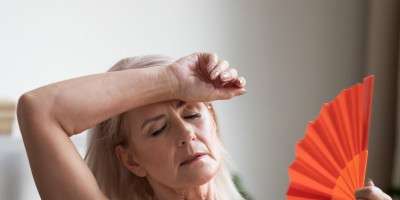
Hot flashes during menopause are usually described as a sudden and intense sensation of heat in the face, neck, and chest. Redness of the skin, sweating, a stronger awareness of the heartbeat, or restlessness may occur at the same time.
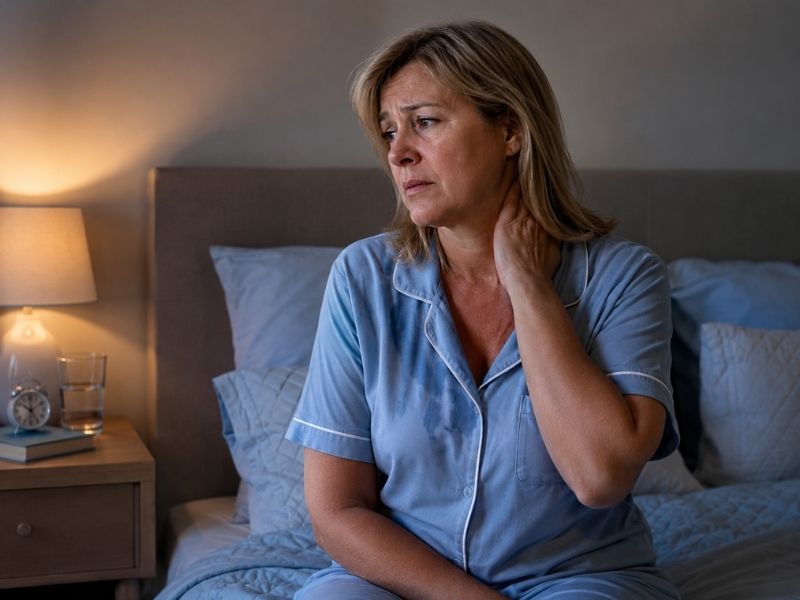
Some women may experience chills and shivering after the heat sensation passes. The duration, frequency, and severity of attacks vary from person to person. Some women experience only a brief and mild sensation of warmth, while others may sweat enough to need to change their clothes.
Hot flashes may occur during the day or while sleeping at night. Hot flashes and night sweats are among the most commonly reported symptoms of the menopause transition.
Night Sweats and Sleep Problems During Menopause
Night sweats during menopause may be described as hot flashes that occur during sleep. Sweating may be mild or severe enough to require changing pajamas or bed linens.
Night sweats may interrupt sleep. However, sleep disturbance during menopause does not develop only because of sweating. Some women may have difficulty falling asleep, wake frequently during the night, or wake very early in the morning even without experiencing hot flashes.
Poor sleep quality may lead to the following effects during the day:
-
Waking up feeling unrefreshed
-
Reduced energy
-
Difficulty maintaining attention
-
Increased intolerance and irritability
-
Reduced productivity in daily tasks
-
Increased feelings of anxiety
Not every sleep problem is caused by menopause. Snoring, sleep apnea, thyroid disorders, certain medications, intense stress, and irregular sleep habits may cause similar symptoms.
Mood and Emotional Changes During Menopause
Mood changes during menopause may appear as irritability, emotional sensitivity, anxiety, reduced motivation, or feeling more emotionally vulnerable than before.
In addition to fluctuating hormone levels, poor sleep, a heavy workload, family responsibilities, and social changes encountered during this stage of life may also affect mood. Therefore, it is not appropriate to attribute every emotional change solely to hormones.
Menopause and depression are not the same condition. Temporary emotional fluctuations may occur, but persistent low mood, withdrawal from social life, marked loss of interest, or impaired daily functioning should be evaluated separately.
Forgetfulness and Brain Fog During Menopause
Brain fog during menopause refers to the feeling of having difficulty organizing thoughts, finding words, focusing on a task, or remembering something done recently.
The following cognitive symptoms may occur during this period:
-
Difficulty recalling names or finding words
-
Forgetting why one entered a room or went somewhere
-
Difficulty focusing on multiple tasks at the same time
-
Difficulty with planning and organization
-
Feeling mentally slowed down
-
Becoming distracted more easily
Difficulty concentrating and remembering may occur during the menopause transition. However, cognitive function may also be affected by age, sleep quality, stress levels, mood, and medications.
New and significant forgetfulness, difficulty performing daily activities, or problems with orientation should not be explained solely by menopause.
Vaginal Dryness and Urinary Symptoms During Menopause
Vaginal dryness during menopause may be associated with changes in the moisture and elasticity of vaginal tissues. Burning, itching, irritation, or discomfort during sexual intercourse may accompany dryness.
The following symptoms may occur during and after the menopause transition:
-
Sensitivity in the vaginal area
-
Friction or pain during sexual intercourse
-
Needing to urinate more frequently
-
Waking at night to urinate
-
A sudden urge to urinate
-
A burning sensation during urination
-
Difficulty holding urine
-
Recurring urinary tract symptoms
Vaginal dryness and urinary symptoms do not begin at the same time in every woman. Some symptoms may become more noticeable after menopause.
Foul-smelling discharge, vaginal bleeding, severe pain, or fever should not be attributed only to menopause-related dryness.
Can Palpitations Occur During Menopause?
Palpitations during menopause may be felt as the heart beating faster, more forcefully, or irregularly than usual. Some women experience this sensation during a hot flash, while others notice it at rest.
Although palpitations may occur during menopause, they are not specific to this period. Anemia, thyroid problems, caffeine consumption, anxiety, certain medications, and heart rhythm disorders may also cause palpitations.
New, frequently recurring, or prolonged palpitations should be evaluated. Medical attention should be sought without delay if palpitations are accompanied by chest pain, shortness of breath, fainting, or a feeling of impending fainting.
How Do the Skin, Hair, and Body Change During Menopause?
During menopause, some women may notice that their skin becomes drier or more sensitive. Thinning hair, increased hair loss, and changes in nail structure may also occur.
Body fat distribution may change over time, with a greater tendency for fat to accumulate around the abdomen. However, these changes are not caused solely by menopause. Age, genetics, muscle mass, eating habits, physical activity, and thyroid disorders may also play a role.
Rapid hair loss, unexplained weight changes, or significant skin problems should not be considered menopause symptoms without further evaluation.
Can Muscle, Joint, and Head Pain Occur During Menopause?
Changes in hormone levels during the menopause transition may affect muscles, joints, and connective tissues. During this period, muscle and joint pain during menopause may be experienced as morning stiffness, back or lower back pain, knee tenderness, or difficulty moving. In some women, stiffness becomes more noticeable after rest and improves with movement. In women with a previous history of migraine or recurring headaches, the frequency, duration, and severity of pain may also change.
IMS 2026 and EMAS documents specifically emphasize that musculoskeletal symptoms are common during perimenopause. These may include widespread joint pain, morning stiffness, muscle pain, reduced muscle strength, and longer recovery after exercise. These symptoms may often be confused with rheumatic diseases.
Some women may experience restricted shoulder movement and frozen shoulder (adhesive capsulitis) during perimenopause. A growing number of studies in recent years suggest an association between reduced estrogen levels and adhesive capsulitis.
However, muscle, joint, and head pain are not specific to menopause. Rheumatic diseases, thyroid disorders, vitamin D deficiency, physical inactivity, sleep problems, and intense stress may cause similar symptoms.
Evaluation is needed if the pain lasts for a long time, becomes progressively worse, or limits daily movement. A sudden severe headache accompanied by vision loss, numbness, weakness, or speech difficulty may require urgent medical assessment.
Is Tinnitus a Symptom of Menopause?
Tinnitus may occur in some women alongside hormonal changes, but it should not be attributed directly to menopause. An ear, nose, and throat evaluation is required, especially when tinnitus is one-sided, begins suddenly, or is accompanied by hearing loss.
Less Commonly Reported Symptoms During Perimenopause and Menopause
Some women may also experience the following symptoms:
Dizziness, electric shock sensations, itching, breast tenderness, dry mouth, tingling, dry eyes, changes in smell and taste, reduced energy, and fatigue.
Although these symptoms may be considered related to menopause, other medical causes should always be ruled out.
Are Menopause Symptoms the Same in Every Woman?
The menopause experience is different for every woman. Some women experience only changes in their menstrual pattern, while others may have multiple physical and emotional symptoms.
The following characteristics of symptoms may vary from person to person:
-
Age at onset
-
Order of appearance
-
Frequency
-
Severity
-
Duration
-
Impact on daily life
Hot flashes may be the most prominent symptom in one woman, while sleep problems, vaginal dryness, or mood changes may be more noticeable in another. It is also possible to enter menopause without experiencing any significant symptoms.
Can Menopause Symptoms Be Confused With Other Conditions?
The answer to the question “How can menopause be recognized?” is not limited to listing symptoms. Age, menstrual pattern, the time symptoms began, medications, and personal medical history should be evaluated together.
Conditions that may cause symptoms similar to menopause include:
-
Thyroid disorders
-
Anemia
-
Pregnancy
-
Intense stress
-
Depression and anxiety disorders
-
Sleep disorders
-
Side effects of certain medications
-
Heart rhythm disorders
-
Infections
-
Blood sugar irregularities
A person should not diagnose themselves with menopause based on a single symptom. A delayed period may be caused by pregnancy, palpitations by thyroid or rhythm problems, and fatigue by anemia.
How Can Menopause Symptoms Be Tracked?
Recording when symptoms begin and how they affect daily life may help provide more detailed information during a medical evaluation.
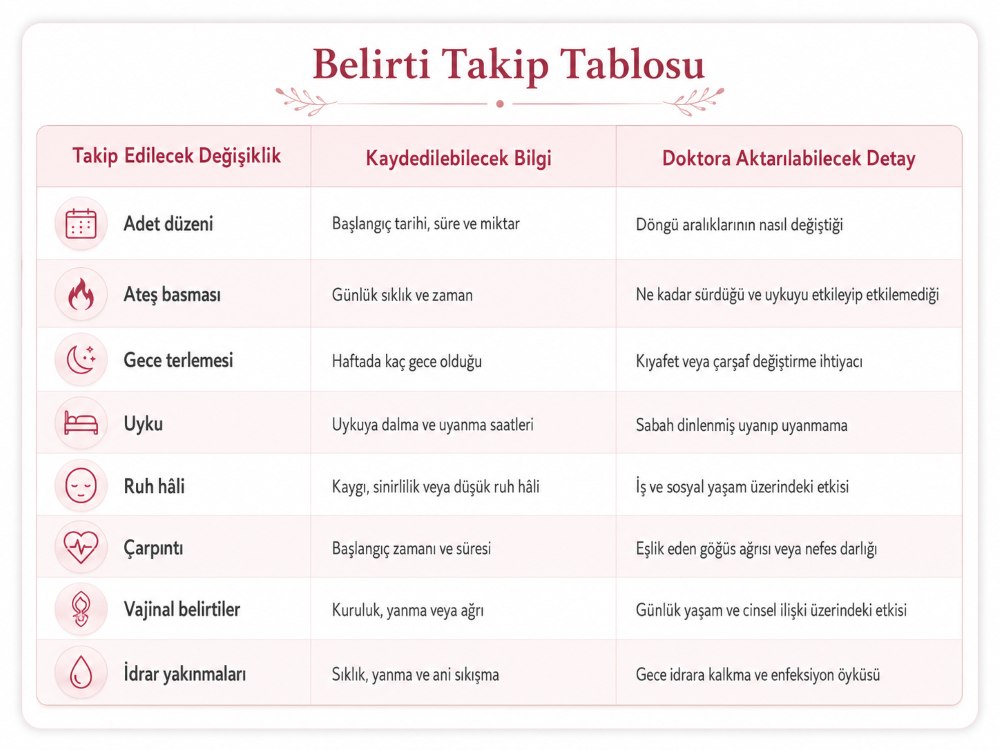
Recording symptoms does not establish a diagnosis on its own, but it may make it easier to understand how changes develop over time.
Which Menopause Symptoms Require Medical Evaluation?
A gynecologist should be consulted if symptoms that appear to be related to menopause significantly affect daily life or if there is uncertainty about whether the symptoms are caused by menopause.
There is no need to wait for symptoms to become severe before seeking medical advice. Regular evaluations before or during the menopause transition may help track individual changes, identify potential health risks early, and support a healthier and more comfortable menopause experience.
Evaluation is important in the following situations:
-
Very heavy or prolonged menstrual bleeding
-
Frequently recurring bleeding between periods
-
Bleeding after sexual intercourse
-
Vaginal bleeding after menstruation has completely stopped
-
New or frequently recurring palpitations
-
Persistent low mood or significant anxiety
-
Forgetfulness that affects daily life
-
Unexplained weight loss
-
Severe or progressively worsening pelvic pain
-
Menopause-like symptoms beginning before the age of 40
Symptoms of early menopause may include irregular or absent periods together with hot flashes, night sweats, sleep disturbance, and vaginal dryness. Specialist evaluation is important when symptoms begin before the age of 45, especially if the person is younger than 40.
Even when there are no significant symptoms, medical advice may be sought for personalized recommendations regarding sleep, bone health, cardiovascular health, weight management, sexual health, and vaginal symptoms. These consultations may help women prepare for changes that can occur during menopause and support the preservation of quality of life.
Chest pain, fainting, significant shortness of breath, sudden speech or movement problems, and uncontrollably heavy bleeding may require urgent medical evaluation.
Frequently Asked Questions About Menopause Symptoms
Can Menopause Symptoms Occur While Menstruation Continues?
Yes. Many symptoms, such as hot flashes, sleep problems, and mood changes, may begin before menstrual periods stop completely.
Can Menopause Symptoms Disappear on Some Days?
The frequency and severity of symptoms may fluctuate over time. Symptoms that decrease for a while may become noticeable again later.
Can Chills and Shivering Occur During Menopause?
Chills or shivering may occur after a hot flash due to changes in body temperature. If persistent chills are present, other health problems should also be evaluated.
How Many Years Can Menopause Symptoms Last?
The duration of menopause symptoms varies from person to person, and some symptoms may continue for several years. The duration of hot flashes and night sweats is not the same for every woman.
Can Blood Pressure Increase During Menopause?
After menopause, the likelihood of high blood pressure may increase together with age, weight changes, and other cardiovascular risk factors. Symptoms such as headache or palpitations do not indicate high blood pressure on their own, so blood pressure should be measured.
What Are the Symptoms of Temporary Menopause?
Some medications or medical treatments may temporarily suppress ovarian function and cause menopause-like symptoms such as missed periods, hot flashes, sweating, and vaginal dryness. In temporary menopause, ovarian function may resume depending on the underlying cause.
Can Menopause Symptoms Be Confused With Pregnancy Symptoms?
A delayed period, fatigue, mood changes, and breast tenderness may occur in both situations. People who may be pregnant should not try to distinguish between them based only on symptoms.
Do Menopause Symptoms Appear in Blood Tests?
Menopause symptoms do not appear directly in a blood test. Evaluation is carried out by considering age, menstrual pattern, symptoms, and any examinations considered necessary.
You May Also Interested In
Curiosities About Menopause cover an important biological process that is a natural p…
Read more