

Menopause symptoms can include changes in your menstrual pattern, hot flashes, night sweats, sleep problems, mood swings, difficulty concentrating, vaginal dryness and urinary complaints. These symptoms usually begin during perimenopause, the period before periods stop completely. Not every woman experiences the same symptoms; the type, severity and duration of symptoms can vary from person to person. Menopause is defined retrospectively after 12 months without a period, when there is no other cause.
Menopause is not a sudden event that starts on a single day. Changes in how the ovaries function can create a transition that spans several years. That is why signs of entering menopause can be noticed while periods are still continuing, before a woman has had her final period.
When Do Menopause Symptoms Start?
Menopause-related symptoms usually begin during the transition known as perimenopause. During this time, menstrual bleeding has not yet stopped completely, but hormone production by the ovaries has become more variable.
The menopause process is generally considered in three stages:
-
Perimenopause: The transition period in which the menstrual pattern begins to change or menopause-related complaints begin to appear. Different women may experience different symptoms.
-
Menopause: Refers to the final menstrual period, but this date is confirmed only after 12 months have passed without another period.
-
Postmenopause: The stage of life after the final menstrual period.
In a woman who is still having periods, the onset of hot flashes, night sweats or sleep problems does not rule out menopause. Perimenopause symptoms can appear months or even years before the final period. The NHS and ACOG state that changes in the menstrual cycle are one of the most commonly noticed first signs of perimenopause.
What Are the First Signs of Menopause?
The first signs of menopause are usually noticed as changes in the menstrual cycle. However, in some women the first sign may be hot flashes, night sweats, disrupted sleep or unexplained mood changes.
The main changes that may be seen early on include:
-
Longer or shorter intervals between periods
-
Heavier or lighter bleeding
-
Skipped periods in some months
-
A sudden feeling of heat in the face, neck and chest
-
Waking up sweating at night
-
Difficulty falling asleep or staying asleep, waking up often during the night
-
Irritability, sensitivity or increased anxiety, emotional ups and downs
-
Difficulty concentrating and trouble finding words (brain fog)
-
Dryness or sensitivity in the vaginal area
-
Changes in sex drive
-
Widespread joint pain and muscle aches
These symptoms do not have to appear in any particular order. Some women first experience irregular periods, while others may notice hot flashes or sleep problems while their periods are still largely regular.
How Can You Tell Menopause Is Starting?
Signs that menopause is starting are recognized not from a single finding but by looking at changes in a woman's usual menstrual pattern and overall life together. New irregular periods, hot flashes and night sweats that begin in your 40s in particular may suggest the menopausal transition.
However, the fact that a symptom appears during menopause does not necessarily mean it is caused by menopause. When symptoms started, how often they occur, how they affect daily life and any other accompanying changes should all be evaluated together.
How Do Periods Change During Menopause?
Irregular periods during menopause are one of the most commonly noticed changes of perimenopause. Periods may come more or less often, and the amount and duration of bleeding may differ from previous years.
During this time, the following changes may occur:
-
A longer interval between two periods
-
Periods starting earlier than usual
-
No periods for several months
-
Lighter bleeding than before
-
Heavier or longer-lasting bleeding
-
Light spotting between cycles
Although changes in bleeding patterns are common in perimenopause, not every episode of bleeding should automatically be attributed to menopause. If you have very heavy bleeding, frequent bleeding between periods, bleeding after sex, or vaginal bleeding that returns after your periods have stopped completely, you should see an obstetrician-gynecologist.
It is not possible to know at the time which period is the final one. A period can be considered the final one only if no further period occurs over the following 12 months, provided a hormonal birth control method is not being used.
Hot Flashes During Menopause
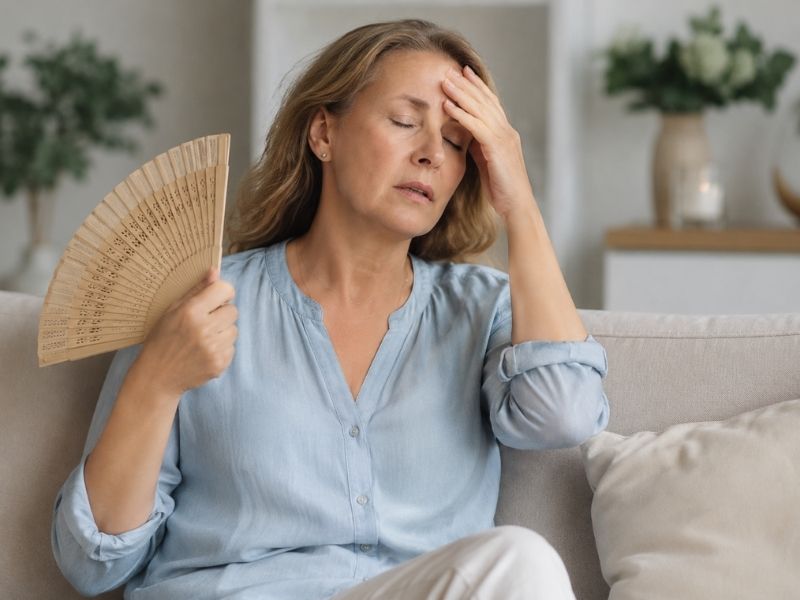
Hot flashes during menopause are a sudden, intense feeling of heat that usually starts in the face, neck and chest. During a hot flash, flushing of the skin, sweating, a more noticeable heartbeat or restlessness may occur.
In some women, the feeling of heat may be followed by chills and shivering. The duration, frequency and severity of episodes vary from person to person. Some women feel only a brief, mild warmth, while others may sweat so much that they need to change their clothes.
Hot flashes can occur during the day as well as during sleep at night. Hot flashes and night sweats are listed among the most commonly reported symptoms of the menopausal transition.
Night Sweats and Sleep Problems During Menopause
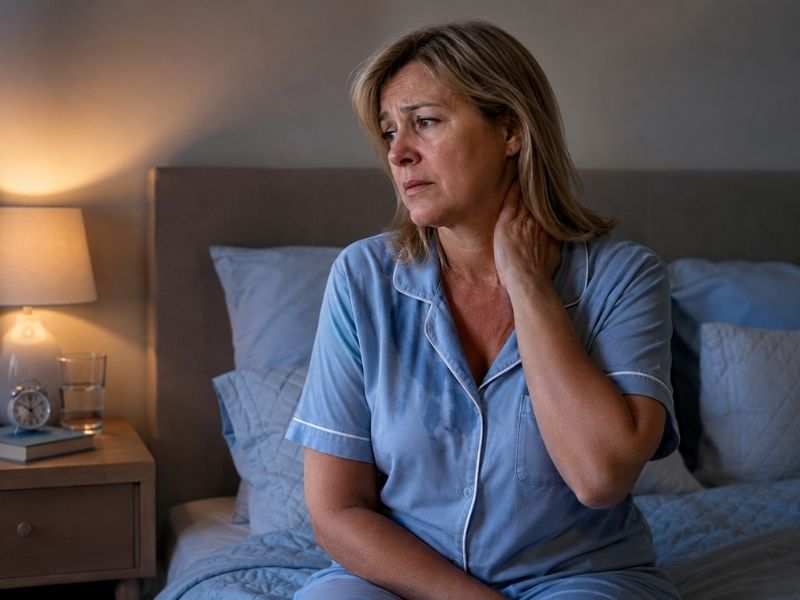
Night sweats during menopause can be described as hot flashes that occur during sleep. The sweating may be mild, or it may be heavy enough to require changing pajamas or sheets.
Night sweats can lead to interrupted sleep. However, sleep disturbances during menopause are not caused only by sweating. Some women may have difficulty falling asleep, wake up often during the night or wake up very early in the morning even without hot flashes.
Poor sleep quality can lead to the following during the day:
-
Waking up feeling unrested
-
Low energy
-
Difficulty staying focused
-
Impatience and irritability
-
Reduced productivity in daily tasks
-
Increased feelings of anxiety
Not every sleep problem is caused by menopause. Snoring, sleep apnea, thyroid disease, certain medications, high stress and irregular sleep habits can also cause similar complaints.
Mood and Emotional Changes During Menopause
Mood changes during menopause may appear as irritability, emotional sensitivity, anxiety, reduced motivation, or feeling more fragile than before.
In addition to fluctuating hormone levels, sleep problems, a heavy workload, family responsibilities and the social changes that come at this stage of life can also affect mood. It is therefore not accurate to attribute all emotional changes to hormones alone.
Menopause and depression are not the same thing. Although temporary mood changes may occur, a persistently low mood, withdrawal from social life, marked loss of interest or impaired daily functioning should be evaluated separately.
Forgetfulness and Brain Fog During Menopause
Brain fog during menopause refers to a feeling of having trouble gathering your thoughts, finding words, focusing on a task, or remembering something you did a short time ago.
The following cognitive complaints may occur during this time:
-
Difficulty finding names or words
-
Forgetting what you came to do after going somewhere to do it
-
Difficulty focusing on more than one task at a time
-
Difficulty with planning and organization
-
Feeling mentally slowed down
-
Being more easily distracted
Difficulty concentrating and remembering may occur during the menopausal transition. However, cognitive function can be affected by many factors, such as age, sleep quality, stress level, mood and medications.
New, marked forgetfulness, a decline in everyday living skills or difficulty finding your way should not be attributed to menopause alone.
Vaginal Dryness and Urinary Complaints During Menopause
Vaginal dryness during menopause may be related to changes in the moisture and elasticity of vaginal tissues. Dryness may be accompanied by burning, itching, irritation or discomfort during sex.
During and after the menopausal transition, the following complaints may occur:
-
Sensitivity in the vaginal area
-
Friction or pain during sex
-
Needing to urinate more often
-
Getting up at night to urinate
-
A sudden urge to urinate
-
A burning sensation when urinating
-
Difficulty holding urine
-
Recurring urinary tract complaints
Vaginal dryness and urinary symptoms do not begin at the same time in every woman. Some complaints may become more noticeable after menopause.
Symptoms such as foul-smelling discharge, vaginal bleeding, severe pain or fever should not be attributed solely to menopause-related dryness.
Do Palpitations Occur During Menopause?
Palpitations during menopause may be felt as the heart beating faster, harder or more irregularly than usual. Some women experience this sensation during a hot flash, while others may notice it while at rest.
Although palpitations can occur during menopause, they are not a symptom specific to menopause. Anemia, thyroid problems, caffeine intake, anxiety, certain medications and heart rhythm disorders can also cause palpitations.
Palpitations that are new, recur frequently or last a long time should be evaluated. If palpitations are accompanied by chest pain, shortness of breath, fainting or feeling faint, seek medical care without delay.
How Do Skin, Hair and Body Shape Change During Menopause?
During menopause, some women may notice that their skin is drier or more sensitive. Thinning hair, increased hair loss and changes in nail texture may also occur.
Body fat distribution may change over time, with a greater tendency to gain fat around the abdomen. However, these changes are not caused by menopause alone. Age, genetics, muscle mass, eating habits, physical activity and thyroid disease can also play a role.
Rapidly progressing hair loss, unexplained weight changes or significant skin problems should not be regarded simply as symptoms of menopause.
Do Muscle Aches, Joint Pain and Headaches Occur During Menopause?
Changes in hormone levels during the menopausal transition can affect muscles, joints and connective tissues. During this time, muscle and joint pain during menopause may be felt as stiffness, especially in the morning, upper and lower back pain, tenderness in the knees, or difficulty moving. In some women, stiffness increases after rest, while complaints ease with movement.
In women with a history of migraines or recurrent headaches, the frequency, duration and severity of headaches may change.
IMS 2026 and EMAS documents specifically emphasize that musculoskeletal complaints are common during perimenopause. These may include widespread joint pain, morning stiffness, muscle aches, reduced muscle strength and longer recovery after exercise. These symptoms are often confused with rheumatic diseases.
During perimenopause, some women may experience limited shoulder movement and frozen shoulder. A growing number of studies in recent years show that there is a link between declining estrogen and adhesive capsulitis (frozen shoulder).
However, muscle aches, joint pain and headaches are not unique to menopause. Rheumatic diseases, thyroid disorders, vitamin D deficiency, physical inactivity, sleep problems and high stress can also cause similar symptoms.
Evaluation is needed if pain lasts a long time, gets progressively worse or limits daily movement. A sudden, severe headache, vision loss, numbness, weakness or difficulty speaking may require emergency medical evaluation.
Is Ringing in the Ears a Symptom of Menopause?
Ringing in the ears (tinnitus) may occur together with hormonal changes in some women, but it should not be attributed directly to menopause. An ear, nose and throat (ENT) evaluation is necessary, especially if it is one-sided, starts suddenly or is accompanied by hearing loss.
Less Commonly Reported Symptoms of Perimenopause and Menopause
Some women may also experience the following complaints:
Dizziness, electric shock sensations, itching, breast tenderness, dry mouth, tingling, dry eyes, changes in smell and taste, low energy, fatigue.
Although these symptoms are thought to be related to menopause, other medical causes should always be ruled out as well.
Are Menopause Symptoms the Same for Every Woman?
The experience of menopause is different for every woman. Some women experience only changes in their menstrual pattern, while others may have several physical and emotional symptoms.
The following characteristics of symptoms can vary from person to person:
-
Age at onset
-
Order in which they appear
-
How often they occur
-
Severity
-
How long they last
-
Impact on daily life
For one woman, hot flashes may be the most noticeable complaint, while for another, sleep problems, vaginal dryness or mood changes may stand out. It is also possible to go through menopause without any significant complaints.
Can Menopause Symptoms Be Confused With Other Conditions?
The answer to the question “How do you know if it's menopause?” is not simply a list of symptoms. Age, menstrual pattern, when symptoms started, medications and personal health history should all be evaluated together.
Conditions that can cause complaints similar to menopause include:
-
Thyroid disease
-
Anemia
-
Pregnancy
-
High stress
-
Depression and anxiety disorders
-
Sleep disorders
-
Side effects of certain medications
-
Heart rhythm disorders
-
Infections
-
Blood sugar irregularities
You should not make a diagnosis of menopause yourself based on a single symptom. A late period alone may be due to pregnancy, palpitations may be due to thyroid or heart rhythm problems, and fatigue may be due to anemia.
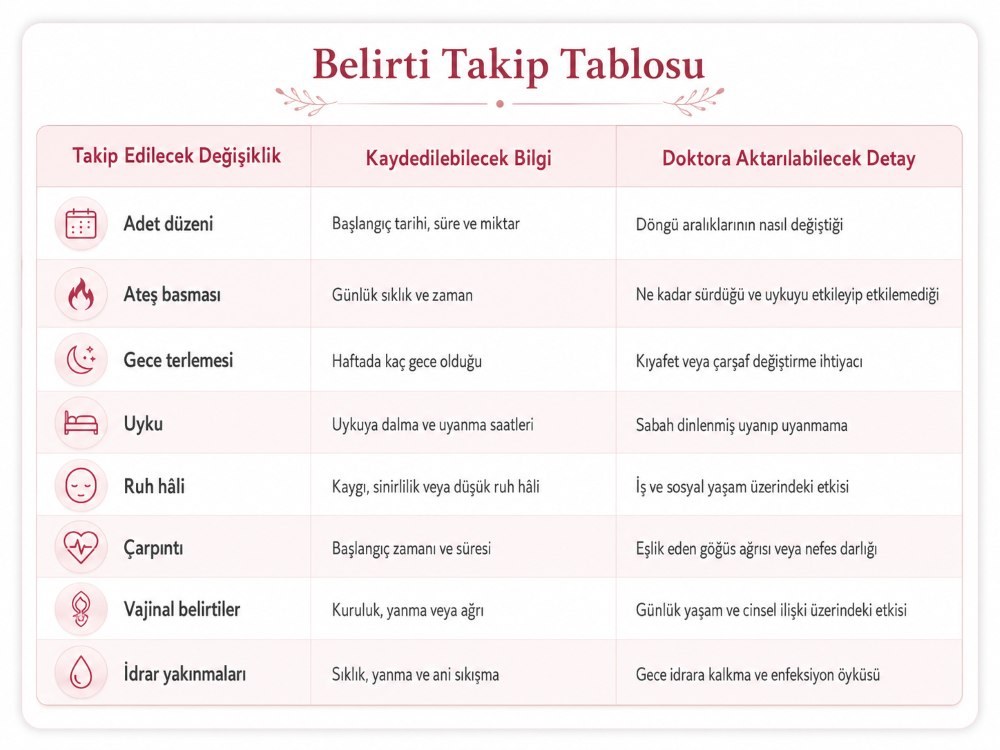
How Can You Track Menopause Symptoms?
Keeping a record of when symptoms started and how they affect daily life can help you give your doctor more detailed information during the evaluation.
Recording symptoms does not lead to a diagnosis on its own, but it can make it easier to understand how changes progress over time.
Which Menopause Symptoms Should Prompt a Visit to the Doctor?
If symptoms that seem related to menopause significantly affect your daily life, or if it is unclear whether your complaints are caused by menopause, you should see an obstetrician-gynecologist.
You do not need to wait for symptoms to get worse before seeing a doctor. Regular evaluations before or during the menopausal transition can help track individual changes, detect possible health risks early, and make the menopause years healthier and more comfortable.
Evaluation is important in the following situations:
-
Very heavy or prolonged menstrual bleeding
-
Frequent bleeding between periods
-
Bleeding after sex
-
Vaginal bleeding that returns after periods have stopped completely
-
New or frequently recurring palpitations
-
Persistent low mood or marked anxiety
-
Forgetfulness that affects daily life
-
Unexplained weight loss
-
Severe or worsening pelvic pain
-
Menopause-like symptoms that start before age 40
Symptoms of early menopause may include irregular or absent periods along with changes such as hot flashes, night sweats, sleep disturbances and vaginal dryness. If symptoms begin before age 45, and especially if you are under 40, a specialist evaluation is important.
Even without any significant complaints, you can see a doctor to get personalized advice on sleep, bone health, heart and vascular health, weight management, sexual health and vaginal complaints. These consultations can help you prepare for changes that may arise during menopause and support your quality of life.
Chest pain, fainting, marked shortness of breath, sudden difficulty speaking or moving, and uncontrollably heavy bleeding may require emergency evaluation.