What Is an Endometrial Polyp? What Causes Polyps in the Uterus?
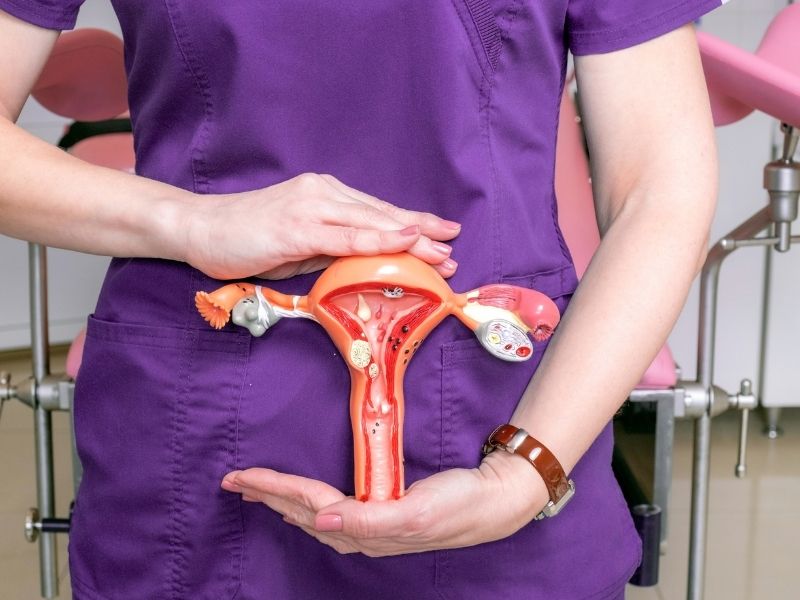
Uterine polyps are mole-like growths that originate from the inner wall of the uterus and extend into the uterine cavity. They may occur singly or in multiples and can vary in size. Uterine polyps can sometimes grow large enough to protrude through the cervix and even out of the vagina. Polyps may be pedunculated (attached by a stalk) or broad-based.
Cervical polyps also often protrude outward from the cervix and cause symptoms.
Although they can occur between the ages of 12 and 80, they are most common between the ages of 29 and 59.
Their cause is unknown. There is no definitive evidence that the hormones estrogen or progesterone trigger the growth of polyps.
How Can I Tell If I Have a Polyp in My Uterus?
A uterine polyp may not cause any symptoms at all.
Uterine polyps can cause bleeding between periods, as well as menorrhagia (very heavy bleeding), intermenstrual bleeding, brown spotting before or after periods, and postmenopausal bleeding.
They can cause bleeding during or after intercourse. This bleeding can lead to symptoms of anemia: the patient may feel weak and fatigued, have palpitations, or experience blackouts (dimmed vision).
They can prevent pregnancy, cause infertility, or lead to miscarriage.
Can Endometrial Polyps Become Cancerous?
Endometrial polyps generally do not become cancerous, but there is a small risk of malignant transformation. Benign polyps can sometimes occur together with endometrial cancer (uterine cancer). Therefore, especially in the postmenopausal period, even if a benign polyp has been removed from the uterus, there is no guarantee that uterine cancer is not also present. For this reason, it is beneficial to also perform an endometrial biopsy or curettage when necessary.
How Is an Endometrial Polyp Diagnosed?
For women with irregular or heavy bleeding, we recommend an endometrial biopsy to diagnose an endometrial polyp, endometrial hyperplasia or endometrial cancer. In the past, dilation and curettage was widely used for this purpose.
When an endometrial polyp is suspected on ultrasound or HSG (hysterosalpingography), an X-ray of the uterus taken with contrast dye, hysteroscopy is recommended for a definitive diagnosis. With hysteroscopy, the suspected polyp is also removed at its base and sent to pathology.
Sometimes a polyp is diagnosed incidentally during curettage or a hysterectomy (surgical removal of the uterus).
How Are Endometrial Polyps Treated? How Is a Polyp Removed by Hysteroscopy? How Is Uterine Polyp Treatment, or Polyp Surgery, Performed?
With the curettage method, one option is to first try to remove the polyps by grasping them with forceps, then clean the inside of the uterus by scraping and send the material to pathology; however, fragments may be left behind and cause bleeding. Sometimes a polyp is found incidentally in curettage material obtained for another reason, and in this case, if the patient has no complaints, no further treatment may be needed.
In the hysteroscopy method, under sedation-analgesia or light anesthesia and after sterile draping, a millimeter-sized camera is inserted through the cervix so the polyps can be seen; the visualized polyps can then be completely removed at their base using special small instruments built into the hysteroscope tip. Sometimes the polyp may be located on the cervix; in this case, it can be removed in an office setting under local anesthesia or even without any anesthesia.
When Can I Return to My Normal Routine After Hysteroscopic Polyp Surgery?
You can go home the same day after hysteroscopy; there is no need to stay in the hospital. You can return to work the next day.
What Does Endometrial Polyp Surgery Cost in Istanbul?
First of all, we recommend that you have your hysteroscopy performed by an experienced physician.
Hysteroscopic polyp surgeries have been performed successfully for many years in Istanbul by Prof. Dr. Çiğdem Yayla Abide.
The cost of hysteroscopic polyp removal surgery varies depending on the hospital chosen.
Do Endometrial Polyps Recur After Treatment?
Yes. Endometrial polyps may recur after treatment.
Should the Uterus Be Removed for Endometrial Polyps?
Hysterectomy, the surgical removal of the uterus, is performed when early cancer or cancer is detected in polyps. Alternatively, if the patient's bleeding continues despite surgical removal of the polyps, the option of removing the uterus may be offered to the patient.