Short Answer: The HPV test is a screening test that looks for the DNA of high-risk HPV types in a cell sample taken from the cervix. It is done during a gynecological exam by taking a sample from the cervix with a speculum; it is painless, and results are usually ready within 5–10 business days. It is especially recommended for women over 30 and those with an abnormal Pap smear result.
HPV, or human papillomavirus, is one of the most common sexually transmitted viruses. Worldwide, nearly 80% of sexually active people are infected with HPV at some point in their lives. Not every type of HPV is harmful; however, some types can cause serious health problems such as cervical cancer and genital warts. Fortunately, it is possible to detect these infections at an early stage and intervene. This is where the HPV test comes in.
What Is an HPV Test?
The HPV test is a screening test done to detect the presence of high-risk HPV types in the cells of the cervix in women. The HPV test is used particularly to assess the risk of cervical cancer. Cell samples, collected in a similar way to a Pap smear, are examined this time directly for the DNA of the HPV virus.
Rather than detecting the cellular changes caused by the virus, the HPV test is able to identify the virus itself. This makes it an indispensable early diagnosis tool, especially for women over 30. While the Pap smear mainly looks for cellular changes, the HPV test targets the virus directly.
How Is an HPV Test Done?
The HPV test is a very simple and quick procedure. In women, it is done by taking a sample from the cervix. The test is usually performed during a gynecological exam and is painless.
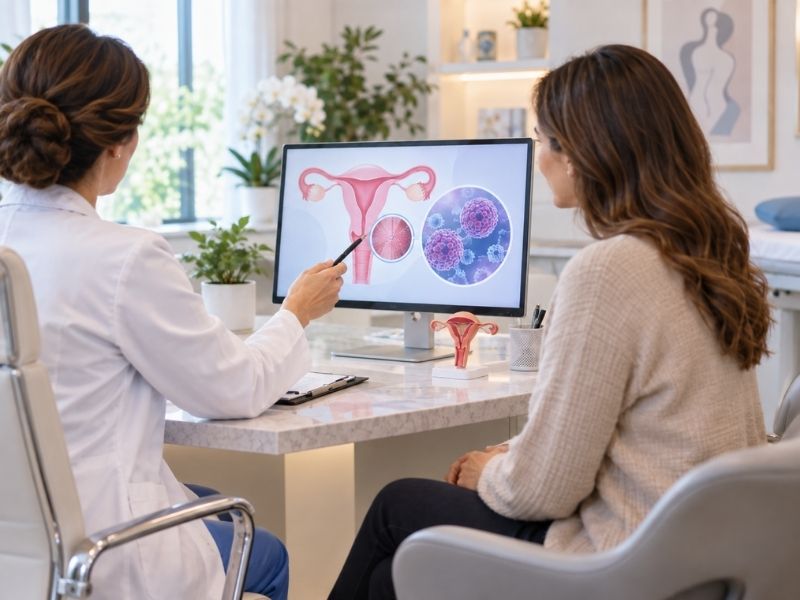
1. The patient lies on the gynecological exam table. She usually lies on her back with her knees bent and her legs placed in the supports.
2. The doctor uses a sterile instrument called a "speculum" to gently open the vagina. This instrument makes the cervix visible.
3. A cell sample is taken from the cervix using a special brush or spatula. This is usually painless, but you may feel slight pressure.
4. The sample is sent to the laboratory for HPV DNA testing. This test looks for viral DNA from high-risk HPV types.
5. Results are usually ready within 5 to 10 days. If the test result is HPV-positive, the doctor determines the next steps; for example, further tests such as colposcopy or a biopsy may be done.
What to Keep in Mind Before an HPV Test
For accurate results, keep the following in mind before having an HPV test:
- Do not have sexual intercourse for 48 hours before the test.
- Do not use vaginal douches, creams or medications.
- Do not have the test during your period.
Who Should Get an HPV Test?
The HPV test was developed specifically for the early detection of high-risk HPV types that can lead to cervical cancer. For this reason, the test is not done on every woman but is aimed at specific age and risk groups.
The HPV test is a screening test recommended especially for women over 30. This is because the risk of HPV infection becoming chronic is higher in this age group. Testing at this age allows long-term cancer risk to be assessed more accurately.
For women whose Pap smear shows abnormal cellular changes, an HPV test is recommended to find out whether these changes are caused by HPV. Particularly in the case of inconclusive results such as ASC-US (atypical squamous cells), an HPV test can clarify the diagnosis.
Women with a family history of cervical cancer, those with a weakened immune system (for example, HIV-positive individuals) or those with a long history of sexual partners are at higher risk for HPV. For these women, an HPV test may be recommended at a much younger age.
The HPV vaccine protects against some types of the virus. Because unvaccinated people have a higher risk of being infected with these types, regular HPV screening is recommended for them.
Although a Pap smear is generally preferred over an HPV test for women under 30, the HPV test can also be used in this age group for high-risk individuals or after an abnormal Pap smear result.
When Are HPV Test Results Ready?
Thanks to modern laboratory techniques, the HPV test is a screening test that can deliver results quickly. In general, HPV test results may be ready within 5 to 10 business days.
How long results take may vary depending on the laboratory method used, whether HPV genotyping is done and how the sample is evaluated.
HPV Test Price
The main factors that affect the price of an HPV test are:
- Method used: The price may differ between a standard HPV DNA test and HPV and Pap smear co-testing.
- Laboratory process: Whether the sample is examined with a standard HPV test or with HPV genotyping can affect the scope and price of the test.
- Test scope: The HPV types tested for and the laboratory method used may vary depending on the testing process.
The price of an HPV test may vary depending on the test method used and the scope of the laboratory analysis.
What Happens If Your HPV Test Is Positive?
A positive HPV test means that one of the high-risk HPV types is present in your body. However, this result does not mean that you have cancer or will get cancer. HPV positivity is very common, and in most cases the immune system can clear the virus on its own.
A positive HPV result shows that one of the high-risk HPV types (for example, type 16 or type 18) is present in your cervix. However, this is only a warning sign; the seriousness of the situation is assessed with further tests.
If you have not had a Pap smear before, a Pap smear is recommended for people who test positive for HPV. This test looks for cellular changes in the cervix.
The HPV type is very important. If a high-risk HPV type is positive:
- Colposcopy (microscopic examination of the cervix) is recommended even if the Pap smear result is normal.
- If the Pap smear result is not normal, colposcopy is recommended in any case.
If types other than the high-risk types are positive, colposcopy is recommended whether the Pap smear result is normal or abnormal.
If suspicious areas are found during colposcopy, a biopsy may be taken from these areas. This makes it possible to detect precancerous lesions of the cervix (CIN1, CIN2, CIN3).

Indications for Colposcopy
1. Abnormal Pap Smear Results
- ASC-US (atypical squamous cells of undetermined significance) when positive 2 years in a row
- LSIL (low-grade squamous intraepithelial lesion)
- HSIL (high-grade squamous intraepithelial lesion)
- ASC-H (cannot exclude HSIL)
- AGC (atypical glandular cells)
2. High-Risk HPV Positivity
- Especially when HPV type 16 and/or 18 or 45 is detected
3. Visible Abnormalities of the Cervix
- Erosion, an ulcer, a mass or a bleeding area seen on the cervix during the exam
4. Postcoital Bleeding (Bleeding After Sex)
5. Suspected cervical lesion during a gynecological exam
Click here for detailed information about HPV Treatment.