In vitro fertilization (IVF) is one of the most effective and promising options for couples who cannot conceive naturally. Thanks to today's advanced laboratory techniques, high success rates are achieved for both female- and male-factor infertility. For couples who have long put off their dream of having a child, this method offers a fresh start and real hope. One of the most important questions on this subject, however, is who is a candidate for IVF.
What Is IVF Treatment?
IVF treatment is one of the most advanced assisted reproductive techniques used for couples who cannot have a child naturally. Known medically as in vitro fertilization (IVF), this method involves fertilizing the woman's eggs with the man's sperm in the laboratory and then transferring the resulting embryo to the uterus. Thanks to technological advances, IVF treatment has reached quite high success rates in recent years. In particular, improvements in egg and sperm quality, the use of genetic screening methods and individualized treatment protocols have allowed IVF to make many couples' dream of becoming parents come true. The goal of IVF treatment is not only to achieve a pregnancy but also to bring a healthy baby into the world. For this reason, the mother-to-be's hormonal balance, ovarian reserve, uterine structure and overall health are evaluated in detail throughout the process.
Who Is a Candidate for IVF?
IVF treatment is offered to couples who cannot conceive naturally. In particular, if pregnancy has not occurred after one year of regular unprotected intercourse, IVF treatment may be considered. The clearest answer to the question who is a candidate for IVF is that
it can be used for women with poor egg quality, men with a low sperm count or poor sperm motility, and women with blocked tubes. IVF is also the preferred option in cases of unexplained infertility, in women of advanced age, and after previous unsuccessful treatment attempts. In some couples, pregnancy cannot occur naturally because of genetic factors, hormonal imbalances or immune system problems. In such cases, IVF treatment both increases the chance of fertilization and allows embryo development to be monitored closely.
When Should You Seek IVF Treatment?
In general, an infertility evaluation is recommended if pregnancy has not occurred despite one year of regular, unprotected intercourse. When the woman is over 35, this period is considered to be about six months. Because fertility potential can decline as a woman gets older, it is important not to delay the evaluation.
If low ovarian reserve is already known, a problem with the tubes has been found, there is a significant abnormality in the sperm parameters, or there is another health problem that could affect pregnancy, an evaluation can be done without waiting for the full one year or six months.
What Are the Requirements for IVF?
When you consider who is a candidate for IVF, you need to know that various tests must be done first. Before starting IVF treatment, both the woman and the man need a thorough health evaluation. In women, the first thing checked is ovarian reserve, that is, whether the body produces enough eggs of good quality. For this, an AMH test, ultrasound and hormone blood tests are done.
In men, sperm count, motility and morphology are evaluated. The semen analysis (spermiogram) done during this process clarifies whether the man is a suitable candidate for IVF. IVF also requires a healthy uterine structure. If there are fibroids, polyps or adhesions in the uterus, IVF should not be started before these are treated. The mother-to-be's overall health is also very important; conditions such as diabetes, thyroid disorders or obesity should be brought under control. When all of these conditions are met, the success rate of IVF treatment increases significantly.
When Is IVF Recommended?
Whether IVF treatment is used is decided after the woman and the man are evaluated together. The main situations in which IVF treatment may be considered are:
- Blocked fallopian tubes
- Low ovarian reserve
- Risk of early menopause
- Unexplained infertility
- Hormonal problems affecting egg development or ovulation
- Polycystic ovary syndrome
- Vaginismus in the woman or certain sexual function problems in the man
- Advanced maternal age
- Plans to preserve reproductive cells before chemotherapy or radiation therapy
- No results from other infertility treatments
- Significant abnormalities in sperm count, motility or morphology
- Being a carrier of a genetic disease or having a risk of passing a disease on to children
Blocked Tubes
In natural conception, the egg and sperm meet in the fallopian tubes, and fertilization usually takes place there. The fertilized egg then travels toward the uterus and implants in the uterine lining. When one tube is blocked and the other is open, natural pregnancy can still occur, but when both tubes are blocked, the sperm and egg may be unable to meet.
Whether the tubes are open can be assessed with methods such as HSG (hysterosalpingography, an X-ray of the uterus with contrast dye). Past infections or endometriosis can damage or block the tubes. In conditions such as hydrosalpinx, where fluid builds up inside the tube, additional evaluation and, when necessary, surgical treatment may be planned before IVF.
Low Ovarian Reserve
Ovarian reserve naturally declines as a woman gets older, but some women have low ovarian reserve at a younger age. Ovarian surgery, endometrioma, chemotherapy or radiation therapy can also affect ovarian reserve.
Ovarian reserve can be assessed with an AMH blood test and an ultrasound antral follicle count. Especially when surgery, chemotherapy or radiation therapy that could affect the ovaries is planned, egg freezing may be considered in advance for suitable patients.
Unexplained Infertility
If pregnancy does not occur even though evaluations of the woman and the man find no clear cause that could prevent it, the condition may be called unexplained infertility. In this group, ovulation induction, intrauterine insemination (IUI) or IVF may be considered, taking into account age, the duration of infertility and previous treatments.
In unexplained infertility, the order of treatments may not be the same for every couple. The woman's age and how long the couple has been trying to conceive are especially important in deciding on the treatment plan.
Polycystic Ovary Syndrome
In polycystic ovary syndrome (PCOS), irregular ovulation can make it harder to get pregnant. Treatment may first use methods aimed at regulating or supporting ovulation. If pregnancy does not occur with these treatments, assisted reproductive methods such as IUI or IVF may be considered.
For detailed information on PCOS and the IVF process, see the article PCOS and IVF.
Advanced Maternal Age
As a woman gets older, both the number and the quality of her eggs may decline. For this reason, time is an important factor in treatment planning, especially for older women with infertility. Whether IVF treatment is appropriate is decided by evaluating ovarian reserve, ultrasound findings, hormone tests and the duration of infertility together.
IVF Treatment in Special Circumstances
In some special circumstances, IVF treatment becomes unavoidable. When it comes to who is a candidate for IVF, special circumstances take priority. For example, in women who will undergo cancer treatment, egg freezing followed by later use of the eggs through IVF is a common choice. IVF treatment can also be used for couples at risk of early menopause or at risk of a genetic disease. This way, embryos that do not carry the genetic disease can be selected before transfer, and a healthy pregnancy can be achieved. IVF treatment is also considered an option for individuals planning to become single parents and for same-sex couples. With advances in reproductive technology, IVF has become not only a treatment for infertility but also part of planned, conscious parenthood.
Couples at Risk of Genetic Disease
For couples who carry a genetic disease or are at risk of passing a genetic disease on to their children, genetic evaluation of the embryos may be considered as part of IVF treatment. This approach can be considered not only for couples with infertility but also when there is a risk of passing on certain hereditary diseases.
Genetic evaluation of embryos is not done routinely for every couple. Whether it may be needed is determined based on the couple's age, genetic history, previous pregnancies and any genetic tests already done. For more on this topic, see the articles Genetic Diagnosis in IVF and Recurrent Pregnancy Loss.
IVF Treatment for Male-Factor Infertility
One of the most important answers to the question of who is a candidate for IVF is male-factor infertility. When the sperm count is low, motility is poor or the sperm have structural abnormalities, fertilization cannot occur naturally. In such cases, IVF is performed with ICSI (intracytoplasmic sperm injection). In this method, a single sperm is injected directly into the egg to achieve fertilization. This increases the chance of pregnancy even when very few sperm are available.
In male-factor infertility, IVF treatment is highly successful, especially when sperm must be obtained surgically with methods such as TESE. Thanks to modern laboratory techniques, it is possible to create a healthy embryo even when sperm quality is low.
When a semen analysis shows a low sperm count, a reduced proportion of progressively motile sperm or significant abnormalities in sperm structure, assisted reproductive methods may be considered. A complete absence of sperm in the semen sample is called azoospermia.
A history of undescended testicles, vasectomy, retrograde ejaculation, hormonal disorders, or certain testicular diseases and surgeries can affect sperm production or the release of sperm. When necessary, sperm can be retrieved from the testicles with methods such as TESA or TESE and used in IVF treatment. Detailed information on surgical sperm retrieval methods is available in the article Sperm Retrieval Methods in IVF.
When Does IVF Treatment Start?
Before IVF treatment begins, the medical history of the woman and the man, any tests already done and any infertility treatments previously received are evaluated together. The woman has a gynecological exam and ultrasound, and the necessary hormone tests and ovarian reserve assessment are done. The man has a semen analysis and any other evaluations that are needed.
IVF treatment usually starts on day 2 or 3 of the menstrual period. An ultrasound done at this time evaluates the follicles in the ovaries and the uterine lining. The medications and doses to be used are planned individually based on the mother-to-be's age, weight, ovarian reserve, follicle count and response to previous treatments.
In some patients for whom chemotherapy or another urgent treatment or surgery that could affect the ovaries is planned, starting ovarian stimulation without waiting for a specific day of the menstrual cycle may also be considered.
Stages of IVF Treatment
IVF treatment consists of several stages. First, the mother-to-be is given medications to stimulate the ovaries, and egg development is monitored by ultrasound. Eggs that have reached sufficient maturity are collected in a special procedure (egg retrieval). On the same day, a sperm sample is collected from the father-to-be, and fertilization is carried out in the laboratory.
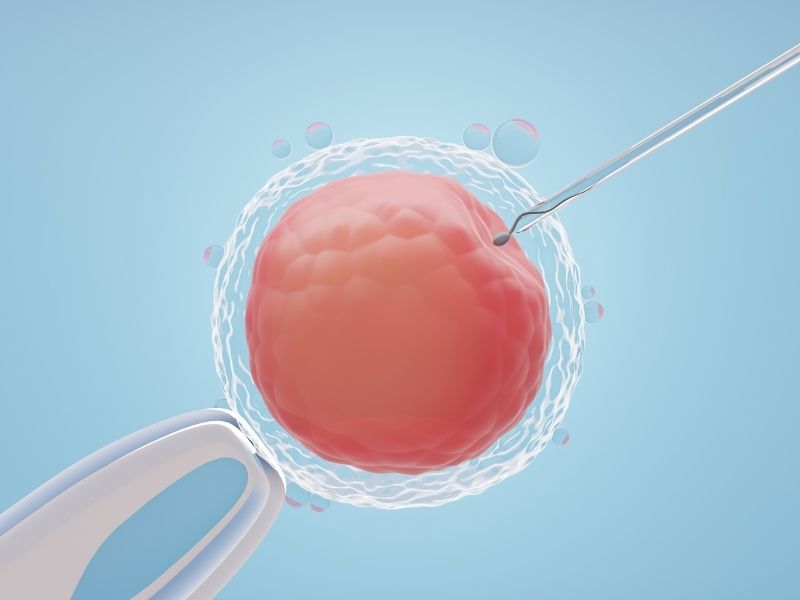
After fertilization, the resulting embryos are grown in the laboratory for several days. Once embryo development is complete, the best-quality embryos are selected and transferred to the mother-to-be's uterus. About 10–12 days after the transfer, a pregnancy test is done. Throughout this process, it is very important for the success of treatment that the mother-to-be stays positive, avoids stress and follows the doctor's recommendations closely.
Who Is Not a Candidate for IVF?
Although IVF treatment is a promising solution for many couples, it cannot be used in some situations.
That is why, alongside the question of who is a candidate for IVF, who is not a candidate for IVF is also an important question. For example, IVF treatment may not succeed in women whose ovarian reserve has been completely depleted because of advanced age or in women whose uterus is severely damaged. In addition, IVF is not recommended for women with serious heart, liver or kidney disease, since pregnancy is medically risky for them. Because transferring genetically unhealthy embryos is not considered ethically or medically appropriate, treatment may also be paused in such cases. When IVF treatment is used at the right time and with the right method, it greatly increases the chance of having a child. However, since every couple's situation is different, the treatment plan must always be tailored to the individual. Thanks to medical advances, the answer to the question of who is a candidate for IVF is broadening every day, bringing hope to more and more families.