

In vitro fertilization (IVF) is possible after 40, but in this age group time, ovarian reserve and especially the chromosomal makeup of the eggs have a greater effect on the outcome of treatment. The chance of IVF success at 40 is not the same as at 43 or 44. For this reason, the evaluation looks not only at the AMH level but also at age, antral follicle count, menstrual regularity, previous pregnancies and any previous IVF attempts.
Low AMH after 40 does not mean the chance of pregnancy is completely gone. AMH mainly gives an idea of how many eggs the ovaries can develop when stimulated with medication. When it comes to pregnancy, however, the chromosomal changes that increase with age become more decisive. For this reason, low AMH and advanced age are not the same thing, and each should be evaluated separately.
In this age group, the most important approach is to start the evaluation with realistic expectations but without losing unnecessary time.
How Do IVF Success Rates Change With Age After 40?
A woman's age is one of the main determinants of IVF success. As age increases, the number of eggs may decrease and the chance of obtaining a chromosomally normal embryo may decline. For this reason, ages 40–41 and ages 44 and over should not be evaluated as the same group.

| Age Group | General Outlook | Key Focus in Treatment |
|---|---|---|
| Ages 40–41 | The chance of pregnancy and live birth with one's own eggs remains, but it is lower than at younger ages | Evaluation without delay and appropriate ovarian stimulation |
| Ages 42–43 | The chance of obtaining a chromosomally normal embryo decreases further | Evaluating the number of eggs and embryos obtained together |
| Age 44 and over | Success with one's own eggs becomes more limited | Realistic expectations, individual reserve and previous treatment results |
This table does not show individual success rates. Two women of the same age may have different AMH levels, antral follicle counts, sperm characteristics, embryo development and uterine findings. So although age is an important determinant, it is not enough on its own to predict an outcome.
What Are the Chances of IVF Success at 40–41?
Pregnancy with one's own eggs is possible with IVF treatment at 40 or 41. However, because the likelihood of chromosomal abnormalities in some of the embryos obtained increases with age, not every egg or every embryo results in a pregnancy.
In this age group, it is not accurate to predict a positive or negative outcome based on the AMH level alone. The ovaries' response to treatment, the number of mature eggs retrieved, the fertilization rate and the development of the embryos are evaluated together. Especially if there is low ovarian reserve, how one attempt turns out can provide important information for the next treatment plan.
Time matters between the ages of 40 and 41. That is why it is better to plan treatment individually and avoid unnecessary waiting periods.
What Changes in IVF Treatment at 42–43?
IVF at 42 or getting pregnant at 43 is possible, but the effect of age-related chromosomal changes becomes more pronounced. For this reason, obtaining a few eggs does not by itself indicate the chance of pregnancy. The eggs also need to mature and fertilize, and the embryos need to continue developing.
In this age group, if ovarian reserve is low, only a small number of embryos may be obtained from a single egg retrieval. In some cases, more than one treatment cycle may be planned in an effort to obtain more embryos. However, this approach is not necessary for every patient.
For women with a previous failed IVF attempt, the details of the earlier treatment become especially important. How many follicles developed, how many mature eggs were retrieved, the fertilization rate and the stage the embryos reached can directly affect the plan for the next attempt.
Is IVF Possible After 44?
At 44 and beyond, egg development and obtaining embryos may still be possible. However, the chance of obtaining a chromosomally normal embryo with one's own eggs decreases significantly with age. For this reason, it is important to discuss expectations realistically before treatment.
In this age group, ovarian reserve, responses to previous treatments and whether there has been a previous healthy pregnancy are evaluated together. The goal is not simply to start treatment, but to create a meaningful plan based on the number of eggs that can be obtained and embryo development.
Ovarian reserve can vary among women of the same age. For this reason, it is not accurate to give a definitive outcome based on age alone.
What Changes in IVF After 40?
In IVF after 40, the main change is not just a decrease in the number of eggs. As age increases, the likelihood of errors during the separation of chromosomes in the eggs rises. This can lead to more frequent chromosomal abnormalities in embryos, failure of the embryo to implant in the uterus, or early pregnancy loss.
Obtaining a large number of eggs can be an advantage, but the number alone is not enough. The eggs need to mature and fertilize, and the embryos need to keep developing.
At the same time, the ovaries' response to hormone medications may be more limited at an advanced age. For this reason, the aim of treatment is not to use the highest possible medication dose, but to make the best possible use of the existing ovarian reserve.
Why Does Chromosomal Quality Matter More Than Egg Count?
When AMH is low, most people focus first on the number of eggs. Yet AMH does not show whether the eggs are chromosomally healthy. AMH and antral follicle count are mainly used to predict how the ovaries will respond to medications.
One of the major factors limiting success after 40 is the decline in the proportion of chromosomally normal embryos among those obtained. That is why low AMH and advanced age are not the same thing. A young woman with low AMH and a 42-year-old woman with the same AMH level do not have their chances of pregnancy evaluated in the same way.
It is not possible to measure egg quality with a single blood test. For this reason, a more realistic estimate is made by evaluating age, response to treatment and embryo development together.
What Tests Are Done Before IVF After 40?
Before treatment, the goal is not just to check the AMH level. Ovarian reserve, the structure of the uterus, ovulation status and male factors are evaluated together.
An antral follicle count can be done by ultrasound. AMH and, when needed, FSH and estradiol levels in the early part of the menstrual cycle can be evaluated. Semen analysis is also an important part of the treatment plan. If a polyp, fibroid or another condition that could affect embryo implantation is suspected inside the uterus, additional testing may be needed.
For those who have had a previous failed IVF treatment, records from the earlier attempt are especially valuable. The medication dose used, the number of days of stimulation, the number of follicles that developed, the eggs retrieved, the number of mature eggs, the fertilization rate and embryo quality can guide the next treatment.
What Do AMH, Antral Follicle Count and FSH Tell Us?
AMH and antral follicle count provide information about ovarian reserve and the ovarian response that can be expected during treatment. FSH can provide additional information about ovarian function, especially when evaluated together with other findings.
Low AMH alone does not mean pregnancy is impossible, and it does not directly measure egg quality. Likewise, a normal AMH level does not mean the chance of pregnancy is high after 40. The age factor is always evaluated separately.
Antral follicle count shows the number of small follicles visible on ultrasound that month. When this value is evaluated together with AMH, a more realistic prediction can be made about how the ovaries may respond to stimulation.
Over 40: Wait, or Start IVF Treatment Right Away?
For women who want a pregnancy over 40, the traditional approach of waiting for months before starting an evaluation is not appropriate. In this age group, an earlier evaluation makes more sense than waiting 6 months to conceive naturally.
This does not mean every woman over 40 should go straight to IVF treatment. First, ovulation, ovarian reserve, the uterus and fallopian tubes, and sperm characteristics are evaluated. For some couples, natural conception or intrauterine insemination (IUI) may be an option, while for others IVF may be more appropriate.
It is especially important not to postpone the evaluation if AMH is low, if menstrual cycles have started to get shorter, if there has been a previous miscarriage or if there has been a failed IVF attempt. The goal here is not to cause panic, but to reduce lost time, knowing that age is a factor that cannot be changed.

How Is IVF Treatment Planned After 40?
There is no single protocol that applies to everyone in IVF treatment after 40. The plan is based on age, AMH, antral follicle count, previous egg retrieval results, sperm characteristics and embryo history.
The goal of treatment is not to use the highest possible medication dose, but to make appropriate and safe use of the existing ovarian reserve. Standard stimulation protocols are sufficient for some women, while others may need a different approach because of low reserve.
During treatment, follicle development is monitored with ultrasound and, when needed, hormone measurements.
How Is the Ovarian Stimulation Protocol Chosen?
In IVF treatment, the ovaries are stimulated with hormone medications to develop more than one follicle. The medication dose and protocol are determined based on AMH, antral follicle count, age and response to previous treatments.
With low ovarian reserve, continually increasing the medication dose does not always mean more eggs will be obtained. For this reason, a higher dose does not always mean a better result.
If few eggs were retrieved in a previous attempt or follicle development was different than expected, the new protocol can be adjusted accordingly. The goal is to find the treatment regimen that can produce the best response for the individual.
What Is Embryo Banking and Who Might Consider It?
Embryo banking is an approach in which, when not enough embryos can be obtained from a single egg retrieval, embryos are created over more than one treatment cycle and frozen.
It may be considered especially for some women with low ovarian reserve who obtain only a few eggs at each egg retrieval. The aim is to have more embryo options before transfer.
However, this approach does not necessarily offer an advantage for every woman over 40. The time, cost and physical burden of more than one egg retrieval must also be taken into account. For this reason, the decision to bank embryos should be based on the response to previous treatment and individual goals.
Who Might Benefit From PGT-A After 40?
PGT-A is a genetic test that evaluates the number of chromosomes in embryos. Because chromosomal abnormalities increase with advanced maternal age, PGT-A may be considered for some patients.
The purpose of PGT-A is not to increase the number of embryos. It aims to help identify which of the embryos obtained are chromosomally suitable. For this reason, embryos suitable for biopsy must be obtained before the test can be done.
It cannot be said that PGT-A should be performed for every patient over 40. Especially for women who obtain very few embryos, the benefit the test would provide should be evaluated separately. The decision should take into account age, the number of embryos, previous miscarriages and any history of failed transfers.
Fresh Embryo Transfer or Frozen Embryo Transfer?
In a fresh transfer, the embryo is placed in the uterus during the same treatment cycle in which the egg retrieval is performed. In a frozen embryo transfer, the embryo is frozen and transferred during a later menstrual cycle.
Which method is more suitable depends on factors such as the condition of the uterine lining, hormone levels, the treatment protocol used and whether PGT-A will be performed.
It cannot be said that frozen transfer is more successful in every case after 40. Fresh transfer may be suitable for some women, while for others frozen transfer may be preferred because of hormone levels or genetic testing.
How Is a Pregnancy Monitored After 40?
When pregnancy is achieved after 40, prenatal care is planned with age-related risks in mind. With advanced maternal age, the likelihood of gestational diabetes, gestational hypertension and certain chromosomal differences may be higher than in younger age groups.
In early pregnancy, the location of the pregnancy within the uterus and its development are evaluated by ultrasound. Chromosomal screening options are discussed at the appropriate weeks. When needed, information can be provided about advanced diagnostic tests.
In the later weeks of pregnancy, the mother's blood pressure, blood sugar and the baby's growth are monitored regularly. In some pregnancies, the frequency of checkups may be increased.
A pregnancy over 40 does not automatically mean a problem pregnancy. However, knowing the age-related risks and arranging checkups accordingly provides safer monitoring for both mother and baby.
The Legal Framework for IVF After 40 in Türkiye
In Türkiye, IVF procedures are carried out under the regulations on assisted reproductive treatment. When creating a treatment plan, not only the medical options but also the legal limits of the methods that can be performed in Türkiye are taken into account.
In treatments after 40, practices abroad and the legal framework in Türkiye should not be confused. Online you may come across information about certain methods available in other countries, but these should not be assumed to be available in Türkiye.
Is Egg, Sperm or Embryo Donation Legal in Türkiye?
In Türkiye, IVF using eggs, sperm or embryo donation from a third party is not performed. For this reason, when IVF options at an advanced age are discussed, donation methods should not be presented as a treatment option available in Türkiye.
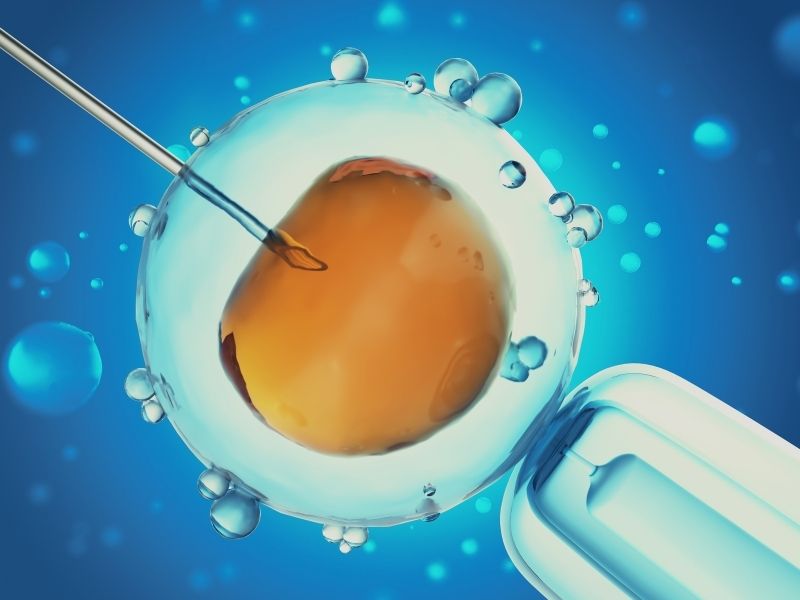
This distinction is important so that practices in other countries are not confused with the legal framework in Türkiye.
When Should Egg Freezing Be Considered If You Are Not Planning Children Yet?
Egg freezing may be considered to preserve fertility for suitable candidates who are not yet planning a pregnancy but want to have children in the future. One of the most important factors here is the age at which the eggs are frozen.
Egg freezing preserves eggs at their current age; it does not reverse the aging of eggs later on. For this reason, having the procedure at a younger age may be more advantageous than at an older age.
When egg freezing is considered around age 40, AMH, antral follicle count and the number of mature eggs that can be obtained should be evaluated together. The goal is to give the individual realistic expectations.