In vitro fertilization (IVF) is a treatment option for couples who have been trying to have a child for at least one year but have not been able to conceive naturally. This method, used to help couples have a child, is a form of assisted reproduction and is carried out by collecting eggs from the woman and sperm from the man and combining them in a laboratory setting. Not everyone who wants IVF can have it; certain problems must be present for this treatment. This article describes the stages of IVF treatment.
The test-tube baby method, known medically as In Vitro Fertilization (IVF), is a technology that enables couples to have children. With this method, eggs retrieved from a woman's ovaries are fertilized with sperm cells under laboratory conditions, and the resulting embryos are then placed in the uterus, making it possible to have a child.
The IVF procedure is used when couples cannot have a child naturally, such as in cases of ovulation problems in women, sperm quality problems in men, or when couples have difficulty having a child due to various medical reasons.
How Long Does IVF Treatment Take?
The length of IVF treatment can vary depending on the couple's treatment plan and any problems that arise during the treatment process. Hormone medications are used to stimulate the woman's ovaries. These medications are used for about 10-12 days, and during this time the woman may need regular ultrasounds and blood tests. The woman's eggs are collected with the help of a needle; this procedure takes 15-20 minutes. Next, sperm samples are obtained from the man and prepared in the laboratory, and 3-5 days later the embryos are placed in the uterus.
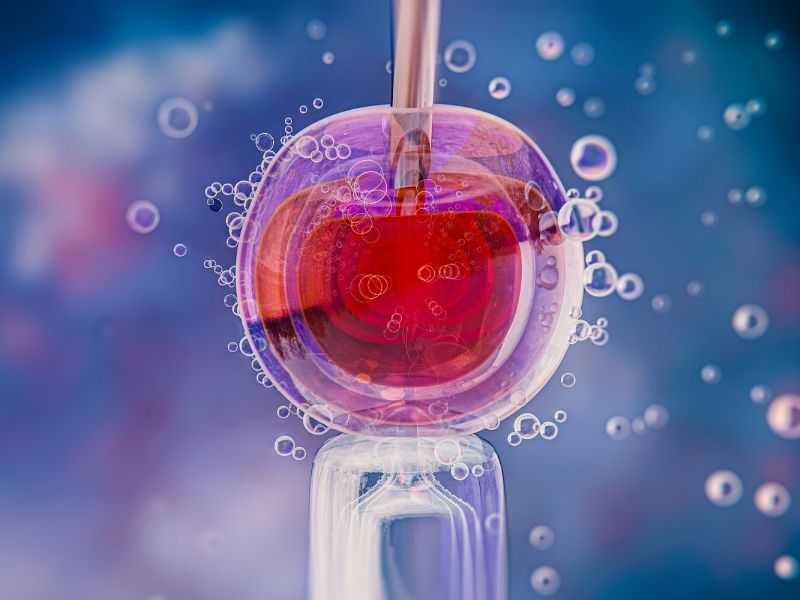
What Are the Stages of IVF?
IVF treatment is a process made up of several stages. This process can be challenging and lengthy. While some patients may respond positively in a short time, for others the process may take longer than expected.
- First, the woman takes hormone medications so that more than one egg develops in her ovaries. Hormone treatment is started on the second day of the period, based on an ultrasound and blood hormone test results.
- After hormonal stimulation to mature the eggs, egg retrieval is performed. This procedure is usually done under ultrasound guidance, and the eggs are collected from the woman's ovaries using a needle.
- At the time of egg retrieval, a sperm sample is obtained from the man. This sample is evaluated for sperm quality and prepared in the laboratory.
- The eggs and the sperm sample are brought together in the laboratory. At this stage, fertilization takes place and embryos form.
- Healthy embryos that develop from the fertilized eggs are transferred to the woman's uterus.
- About two weeks after the embryo transfer, a pregnancy test is done. This test determines whether or not a pregnancy has occurred.
The IVF treatment process can vary depending on many factors, and every couple's journey is different. The success of treatment depends on many factors. One of the most important is egg quality, which depends on the woman's age.
IVF treatment consists of 6 stages. These stages of IVF treatment take about 1 month on average.
Boosting egg production
Before IVF treatment begins, the woman's ovaries are stimulated with hormonal medications so that they can produce more eggs. Producing more eggs will improve the chances of success with IVF treatment. Treatment begins on the second day of the period with an ultrasound and a check of blood hormone levels. The doses of these hormone medications are tailored to each patient.
Egg retrieval
The eggs are collected from the ovaries with a needle under ultrasound guidance. Egg retrieval takes no more than half an hour, and the retrieved eggs are prepared for fertilization in the laboratory.
Sperm collection
Sperm is needed to fertilize the eggs. The sperm samples obtained from the man allow the process to move on to the next stage. The sperm sample is collected on the same day as egg retrieval. If there is no sperm in the man's semen, sperm can be obtained surgically.
Fertilization
The sperm and eggs are brought together in the laboratory to achieve fertilization. In the conventional IVF method, the sperm and eggs are placed together in a dish and left to fertilize. In the ICSI (intracytoplasmic sperm injection) method, sperm is injected directly into the eggs. ICSI is generally used when there is a problem with sperm quality or count.
The embryos formed after fertilization are left to develop in the laboratory for a few days. The best-quality embryos are then selected.
Embryo transfer
The embryos are placed in the mother's uterus with the help of a thin catheter. It is a simple and painless procedure. During this time, the embryos are expected to implant in the uterus. During this period, the mother-to-be should not take any medication, smoke, do heavy work or play sports.
Pregnancy test
A pregnancy test is done about 10 days to 2 weeks after the embryo transfer. If the result is positive, an ultrasound check should be done about 10 days later.
When Is IVF Treatment Used?
IVF treatment is an option for couples who have difficulty having a child naturally. The conditions listed below are suitable for IVF treatment.
- Ovulation problems in women,
- Problems with sperm count, motility or quality in men,
- Blocked or damaged fallopian tubes in women,
- Endometriosis, a condition in which endometrial tissue grows outside the uterus and causes problems,
- A genetic disorder in either parent
- Recurrent miscarriages
- Unexplained infertility
- Low ovarian reserve
These are the conditions that call for IVF treatment. It can be used together with other treatment methods for people who want to have a child.
Can Anyone Who Wants IVF Have It?
Not everyone may be a candidate for IVF treatment. Eligibility is determined when people who cannot have a child naturally consult a specialist and, after the necessary tests, the doctor decides whether they are suitable for IVF treatment in Istanbul.

IVF treatment is recommended for candidates deemed suitable by an Ataşehir OB-GYN and is personalized according to the couple's health history and medical condition.