

Human papillomavirus (HPV) is a group of viruses that cause infections of the skin and mucous membranes. This virus, which has more than 200 known types, is usually transmitted sexually. However, not only sexual contact but also skin-to-skin contact can spread HPV. While most HPV infections clear up on their own without causing symptoms, some types can cause serious health problems.
HPV has two main categories: low-risk and high-risk types. Low-risk types usually cause warts, while high-risk types are associated with cancer. Full sexual intercourse is not needed for the virus to spread; any contact in the genital areas can transmit the infection. In addition, in people with a weakened immune system, HPV infection develops more easily and can stay active for a long time.
That is why learning about HPV is important for taking more personal precautions and reducing the risk of infection. Early diagnosis and preventive measures are needed to reduce how common HPV is.
Low-Risk HPV Types
Low-risk HPV types usually cause warts on the skin or in the genital area and are unlikely to lead to cancer. The most common low-risk types include HPV 6, HPV 11, HPV 1, HPV 2 and HPV 4.
HPV 6 and HPV 11 are the most common low-risk HPV types and cause the vast majority of genital warts cases. These warts appear as small, skin-colored bumps and can sometimes cause itching or discomfort. They are usually painless, but large or widespread warts can negatively affect your sex life. HPV 1, HPV 2 and HPV 4, on the other hand, cause common warts on the hands and the soles of the feet. Warts on the soles of the feet in particular can cause discomfort when walking.
These low-risk HPV infections are often cleared by the immune system. In some cases, however, the warts need treatment.
Treatment of Low-Risk HPV Types
Various methods are used to treat warts caused by low-risk HPV types. As a first step, topical creams prescribed by a doctor are used. These creams help the warts shrink and eventually disappear. Treatment usually lasts a few weeks and requires regular use.
When faster results are desired, cryotherapy (freezing) is preferred.
In this method, the warts are frozen with liquid nitrogen so that they fall off. The procedure is usually completed in a few sessions. Laser treatment is an effective method for larger or more widespread warts. The warts are burned off using laser beams and the tissue is cleared.
Another effective method is electrocauterization (burning), which destroys the warts using an electric current. Surgery may be needed for stubborn and recurring warts. In this procedure, the warts are cut out under local anesthesia.
Despite all treatment methods, the HPV virus can remain in the body and the warts can come back. That is why regular follow-up visits with your doctor are recommended after treatment. Strengthening your immune system and following good hygiene are important for preventing the infection from recurring.
High-Risk HPV Types
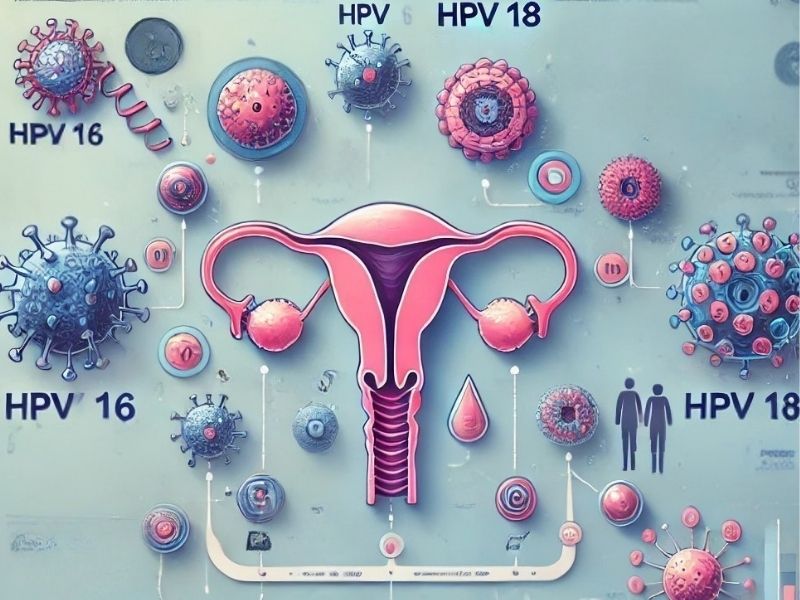
High-risk HPV types are viruses that can cause cancer and are most commonly associated with cancers of the cervix, anus, penis, throat and tongue. HPV 16 and HPV 18 are responsible for about 70% of cervical cancer cases. These types cause genetic changes in cells, triggering abnormal cell growth. If the immune system cannot clear the virus, precancerous cells that may turn into cancer over the years can develop.
In addition to HPV 16 and HPV 18, HPV 31, HPV 33, HPV 45, HPV 52 and HPV 58 are also in the high-risk group. These types have been linked to cancers of the cervix, anus, vagina, vulva, and head and neck. HPV 31 and HPV 33 rank second in the development of cervical cancer in particular, and HPV 52 and HPV 58 are also known to cause cellular mutations.
Treatment of High-Risk HPV Types
High-risk HPV types can lead to cellular changes and precancerous lesions over time. Diagnosing these changes early and treating them appropriately is critical for preventing the disease from progressing. During this process, different treatment methods can be used to stop abnormal cells from spreading.
Regular screening and follow-up are very important for early diagnosis. Abnormal cells in the cervix can be detected at an early stage with a Pap smear and an HPV DNA test.
The LEEP (Loop Electrosurgical Excision Procedure) method is used to treat precancerous lesions. In this procedure, abnormal cells are removed from the cervix using an electrical wire loop. For deeper and larger areas of abnormal tissue, conization is performed. In this procedure, the diseased tissue in the cervix is removed in a cone shape.
For smaller-scale cellular changes, laser ablation is preferred. This method destroys the precancerous cells caused by HPV by burning them with a laser. If the disease has progressed and turned into cancer, treatment involves surgery, radiation therapy or chemotherapy.
The success rate in treating HPV-related cancers depends on how early the disease is diagnosed. That is why regular checkups and early intervention play a critical role in preventing the disease from progressing.