

Sleep problems during menopause can arise from many factors, including changes in hormone levels, hot flashes, night sweats, mood swings, pain and needing to urinate at night. You may have trouble falling asleep, wake up often during the night, wake up too early in the morning or get up feeling unrested even after sleeping long enough. However, not every sleep problem should be attributed to menopause alone; sleep apnea, restless legs syndrome, thyroid disease, anemia, medications and mental health should also be evaluated.
Changes in sleep patterns can begin before periods stop completely. In some women the problem comes and goes, while in others it persists for a long time and affects daily life. That is why the type of sleep problem, how long it lasts and how it affects your daytime functioning should be evaluated together.
What Causes Sleep Problems During Menopause?
Insomnia during menopause does not have a single cause. Fluctuations in estrogen and progesterone levels can affect sleep directly, and they can also disrupt sleep through hot flashes, sweating, palpitations and mood changes.
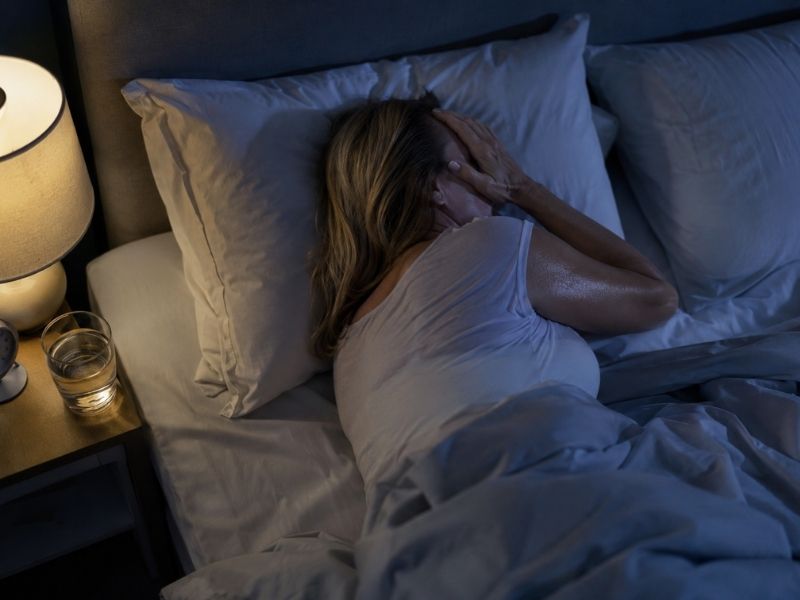
Natural age-related changes in sleep structure can also add to complaints during menopause. There may be less deep sleep, waking more easily from surrounding noise, and difficulty falling back asleep after waking at night.
The main conditions that may be associated with trouble sleeping during menopause include:
- Hot flashes and night sweats
- Anxiety and depressive symptoms
- Waking up at night to urinate
- Joint and muscle pain
- Palpitations and headaches
- Snoring and breathing problems
- Leg restlessness that worsens at night
- Caffeine, alcohol and nicotine use
- Irregular sleep schedule
- Certain medications
A few nights of poor sleep do not by themselves mean chronic insomnia. If the problem lasts a long time, recurs frequently and noticeably affects your attention, energy or daily functioning, a more detailed evaluation may be needed.
How Do Sleep Problems Show Up During Menopause?
Sleep problems during menopause do not appear the same way in everyone. Identifying the type of problem helps pinpoint its possible causes.
Trouble Falling Asleep: Being unable to sleep during menopause may show up as lying awake for a long time after going to bed. A racing mind, daytime stress, feeling hot, palpitations or physical discomfort can make it harder to fall asleep.
Going to bed before you feel sleepy can also lengthen the time it takes to fall asleep. Over time, the bed may become associated with being awake, reinforcing the belief that you will not be able to sleep.
Waking Frequently at Night: Waking at night during menopause may show up as sleep being interrupted several times during the night, with difficulty getting back to sleep. Sweating, the need to urinate, pain, surrounding noise or breathing problems can contribute to nighttime awakenings.
Not every nighttime awakening is caused by hot flashes. Some people believe they woke up because they felt hot, but the awakening may happen first and the feeling of heat may be noticed afterward.
Waking Too Early: Early morning awakening during menopause means waking up well before your planned wake-up time and being unable to fall back asleep. Going to bed too early, long daytime naps and mood changes can lead to this.
If early awakening becomes persistent and causes daytime fatigue, it should not be regarded simply as a symptom of menopause.
Waking Up Unrested: You may wake up tired in the morning even after spending enough time in bed. This may be related to frequently interrupted sleep, or it may be caused by an unrecognized sleep disorder such as sleep apnea.
If you have morning headaches, dry mouth, daytime drowsiness or difficulty concentrating, the quality of your sleep should be evaluated rather than just its duration.
How Do Hot Flashes and Night Sweats Affect Sleep?
Night sweats during menopause can interrupt sleep because of sudden changes in body temperature. Heavy sweating may make it necessary to change clothes or bedding, waking you up completely.
Repeated hot flashes throughout the night can reduce total sleep time and increase morning fatigue. Even so, problems falling or staying asleep can also occur without night sweats.
Keeping the bedroom cool and wearing light, layered clothing can help you stay comfortable at night. However, new-onset or very severe night sweats should not be attributed to menopause alone.
What Else Besides Menopause Can Disrupt Sleep?
Not every sleep problem that begins during menopause is caused by hormonal changes. The possibility of other health problems that tend to appear at the same age should also be considered.
Other factors that can affect sleep include:
- Certain medications
- Anxiety, depressive symptoms and chronic stress
- Thyroid disease
- Anemia and iron deficiency
- Chronic joint, muscle or head pain
- Frequent nighttime urination
- Caffeine late in the day
- Alcohol and nicotine use
- Shift work
- Sleep apnea
- Restless legs syndrome
Poor sleep can in turn increase irritability, forgetfulness, difficulty concentrating and anxiety. In this way, sleep problems and daytime complaints can create a cycle that feeds itself.
What Are the Symptoms of Sleep Apnea During Menopause?
Sleep apnea during menopause is not a direct symptom of menopause, but it is an important sleep disorder that can be overlooked during this time. Narrowing of the airway during sleep can cause breathing to repeatedly become shallow or stop.
Symptoms that may suggest sleep apnea include:
- Loud snoring
- Someone noticing that you stop breathing during sleep
- Waking up gasping or choking
- Morning headaches
- Dry mouth
- Waking up unrested
- Excessive daytime sleepiness
- Difficulty with attention and concentration
In women, sleep apnea can also occur without noticeable snoring. More general complaints such as insomnia, fatigue, morning headaches and mood changes may also be present.
Menopausal hormone therapy is not a standard treatment for sleep apnea. If there is snoring or pauses in breathing, sleep problems need to be evaluated separately.
How Can Sleep Quality Be Improved During Menopause?
Sleep quality during menopause can be supported by regular sleep habits and a suitable sleep environment. However, insomnia that lasts for weeks should not always be expected to improve with changes in daily habits alone.
Practices that can help support healthy sleep include:
- Getting up at about the same time every day
- Going to bed when you feel sleepy
- Not lying awake in bed for long periods
- Reducing screen time and bright light in the evening
- Limiting caffeine in the afternoon
- Keeping in mind that alcohol can disrupt nighttime sleep
- Keeping the bedroom cool, quiet and dark
- Choosing light sleepwear suited to night sweats
- Staying physically active during the day
- Avoiding heavy meals close to bedtime
- Avoiding long naps late in the day
- Not checking the clock repeatedly at night
The answer to “what helps with insomnia during menopause?” depends on the underlying cause of the problem. For one person, changes that reduce night sweats may help, while for another, pain, anxiety or sleep apnea may need to be addressed.
How Are Sleep Problems During Menopause Treated?
The question “how do sleep problems during menopause go away?” can be answered once the reason sleep is disrupted has been identified. The approach is personalized according to the type of insomnia, menopause symptoms and any coexisting health problems.
Evaluating Menopause Symptoms
If sleep is frequently interrupted by hot flashes and sweating, reducing these complaints can help improve sleep. Menopausal hormone therapy is not a sleeping pill as such. However, once menopause-related symptoms are brought under control, sleep problems can improve significantly in many patients.
The treatment decision should be based on age, symptoms, timing of menopause and personal health history. Hormone therapy is not used solely to treat sleep apnea or restless legs syndrome.
Sleeping Pills and Supplements
Sleeping pills may be considered for short-term use in some cases, but they should not be started on your own. Risks such as daytime grogginess, reduced alertness, falls and dependence should be taken into account when deciding whether to use them.
When looking into melatonin for menopause, keep in mind that melatonin does not have the same effect on everyone. Magnesium and herbal products are not definitive solutions either. Supplements can interact with medications you take and may not be suitable for everyone.
When Should You See a Doctor for Menopause Insomnia?
The answer to which doctor to see for menopause insomnia depends on the type of symptoms. For sleep problems that begin together with menopause symptoms, seeing an obstetrician-gynecologist (OB-GYN) first is recommended.
If there is snoring, pauses in breathing during sleep, excessive daytime sleepiness or leg movements, an evaluation by neurology, pulmonology or a relevant sleep clinic that deals with sleep disorders may be needed.
You should seek a specialist's opinion in the following situations:
- Sleep problems that continue for weeks
- Effects on your daily life, work or concentration
- Falling asleep involuntarily during the day
- Drowsiness while driving
- Loud snoring
- Pauses in breathing during sleep
- Waking up gasping or choking
- Severe night sweats
- Persistent palpitations
- Leg restlessness that worsens at night
- Significant anxiety or depressive symptoms
- Unsupervised use of sleeping pills or supplements
There is no definitive answer to how long insomnia lasts during menopause. Its duration can vary depending on the cause of the sleep problem, the severity of menopause symptoms, daily habits and any coexisting health conditions.