

Cervical cancer, a major concern for women's health, is one of the most common gynecologic cancers worldwide. This disease, which can often progress for many years without symptoms, is treatable when diagnosed early. Developing mainly as a result of the HPV virus, cervical cancer can be prevented through regular screening tests and preventive health measures, or detected at an early stage and treated successfully.
What Is Cervical Cancer?
Cervical cancer, known medically as carcinoma of the cervix, is a type of cancer that starts in the cervix, the lower part of the uterus that opens into the vagina. It is one of the most common cancers in women and is a significant health problem, especially in developing countries. Cervical cancer can progress for many years without symptoms and is usually detected during routine gynecological screening. Its most common cause is infection with the sexually transmitted human papillomavirus (HPV). Some types of HPV (especially types 16 and 18) can cause abnormal changes in the cells of the cervix, forming lesions that may turn into cancer over time.
What Causes Cervical Cancer?
The most common factor in the development of cervical cancer is persistent infection of the cervical cells by the HPV virus. HPV is an extremely common virus transmitted through sexual contact. In fact, many women may be infected with HPV at some point in their lives, and in most cases the immune system clears the virus completely within a few years.
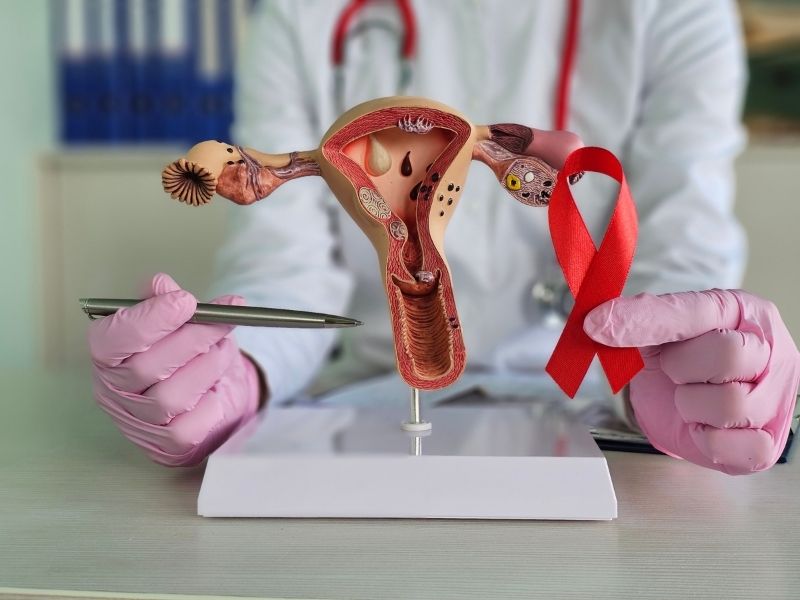
What Causes Cervical Cancer?
The most common factor in the development of cervical cancer is persistent infection of the cervical cells by the HPV virus. HPV is an extremely common virus transmitted through sexual contact. In fact, many women may be infected with HPV at some point in their lives, and in most cases the immune system clears the virus completely within a few years.
In some cases, however, high-risk types of HPV (above all, types 16 and 18) can cause persistent infection in the cells of the cervix and, over time, lead to DNA changes in these cells that may turn into precancerous lesions and cancer. Besides HPV, there are many risk factors that set the stage for cervical cancer. Chief among them are certain sexual behaviors. Becoming sexually active at an early age, having many sexual partners or having a partner with a history of multiple sexual partners significantly increases the risk of HPV transmission. Other sexually transmitted diseases can also raise the risk of cancer by causing chronic inflammation in the cervical tissue. Smoking is an important risk factor for cervical cancer. The harmful chemicals in cigarettes have a toxic effect not only on the lungs but also on the cells of the cervical tissue. In addition, because the immune system works less effectively in women who smoke, the body's ability to fight off HPV infection is reduced. This allows the virus to stay longer in the cervical cells and cause damage. Hormonal factors can also play a role in the development of cancer. According to some research, long-term use of birth control pills (for more than 5 years) in particular may increase the risk of cervical cancer. Similarly, having many births causes repeated physical trauma to the cervix, which can set the stage for cellular changes.
People with a suppressed immune system, such as those living with HIV or those taking immunosuppressive drugs for reasons such as an organ transplant, are more vulnerable to cervical cancer, because the immune system may be unable to fight HPV effectively. Inadequate personal hygiene and low socioeconomic status can also make it harder to access regular screening tests, leading to delays in diagnosis. Genetic predisposition may also play an important role in some women. In people with a family history of cervical cancer, the risk of developing this cancer is higher than in other women. This may be due to both genetic susceptibility and similar lifestyle habits.
Symptoms of Cervical Cancer
The most common symptom of cervical cancer is abnormal vaginal bleeding that occurs independently of the menstrual cycle. Such bleeding requires even more attention if it occurs after menopause. In premenopausal women, bleeding between periods, spotting after sex or heavy bleeding outside of periods are common warning signs. This bleeding may sometimes appear as prolonged, period-like bleeding that causes heavy blood loss. Another common symptom is a change in vaginal discharge. Discharge that is normally odorless and clear may become dark, brownish or yellowish and develop a foul odor when cervical cancer is present. A noticeable increase in the amount of discharge is also something to watch for. This type of discharge may result from bleeding of the tumor in the cervix or from the tumor becoming infected. Another frequent complaint in women with cervical cancer is pain during sex (dyspareunia). This pain is usually related to pressure from or irritation of the tumor in the cervix. Chronic pain in the groin and lower abdomen and a feeling of pressure or fullness in the pelvic area may also be among the symptoms.
As the disease progresses, bladder-related problems such as difficulty urinating, urinary incontinence or frequent urination may also occur. This is related to the cancer pressing on or invading the bladder wall. In more advanced stages, symptoms such as lower back pain, leg pain, swollen lymph nodes in the groin and edema (swelling) in the legs may also appear. These systemic symptoms are usually caused by the cancer spreading to surrounding tissues or the lymphatic system. General effects of cancer on the body, such as weight loss, loss of appetite, general weakness and fatigue, may also occur. These symptoms are mostly seen in advanced-stage cases.
How Is Cervical Cancer Diagnosed?
The Pap smear is the most basic screening method for detecting cervical cancer early. During this test, surface cells are collected from the cervix with a special brush and examined under a microscope. A Pap smear can detect not only cancer but also precancerous cellular changes (for example, dysplasia or CIN). This makes it possible to intervene before they turn into cancer. In addition to the Pap smear, an HPV DNA test may also be done. This test looks for the presence of high-risk HPV types (especially types 16 and 18) in a sample taken from the cervical area. In people found to be HPV-positive, close follow-up or further testing may be needed because the potential for developing cancer is higher.
If the Pap smear result is abnormal or the HPV test is positive, the next step is colposcopy. Colposcopy is a detailed examination of the cervix using a special magnifying device (colposcope). During this procedure, a special solution is applied to the cervix to make areas of abnormal cells more visible. A biopsy is taken from suspicious areas and examined pathologically in the laboratory. This biopsy is necessary to confirm whether cancer is present. In some cases, the doctor also performs a procedure called endocervical curettage (ECC). In this method, a tissue sample is taken by scraping the cervical canal to evaluate cellular changes inside. These methods can be used together to increase the accuracy of the diagnosis.
Once the diagnosis is confirmed, the extent to which the disease has spread, that is, its stage, must be determined. For this, advanced imaging methods such as magnetic resonance imaging (MRI), computed tomography (CT) or positron emission tomography (PET) are used. These methods assess the size of the tumor, whether it has spread outside the uterus, and whether the lymph nodes or distant organs are affected. Based on all the information obtained, the stage of the disease (from I to IV) is determined. This staging is critical for choosing the treatment method and creating a plan tailored to the patient.

How Is Cervical Cancer Treated?
The treatment of cervical cancer is personalized based on factors such as the stage of the disease, the extent of the tumor, the patient's age, overall health and desire to have children. The right treatment plan aims both to bring the disease under control and to preserve quality of life. In early stages, surgery is the main treatment, while in more advanced stages supportive methods such as radiation therapy and chemotherapy come into play. In early-stage cervical cancer cases (stage I and limited stage II), the disease is usually confined to the cervix.
In these cases, surgery is considered the first option. The surgical method may vary depending on the size and location of the tumor. The simplest surgical procedure, conization, involves removing a small cone-shaped piece of the cervix. This procedure is preferred only in very early stages when the cancer is limited to the surface layers. For larger lesions, removing part or all of the cervix (trachelectomy), or even removing the entire uterus if necessary (total hysterectomy), may be required. The ovaries are usually preserved, but they may also be treated surgically in older women or if the tumor has spread. For young women who want to have children, fertility-sparing surgical methods can be used if the cancer is diagnosed at a very early stage. In this case, only the tissue containing the tumor is removed and the uterus is left in place. However, this treatment option should be used only in carefully selected cases and under close follow-up. In advanced-stage cervical cancer cases, radiation therapy, chemotherapy or a combination of the two (chemoradiotherapy) is preferred instead of surgery. Radiation therapy uses high doses of radiation to kill tumor cells. This treatment can be given externally (external beam) or internally (brachytherapy). Chemotherapy uses systemic drugs to stop the growth of tumor cells or prevent them from spreading. Chemotherapy, usually with drugs such as cisplatin, is given at the same time as radiation therapy and increases the effectiveness of treatment.
In some advanced cases, if the tumor cannot be removed surgically or the tumor has recurred, palliative treatment methods may be used. These treatments aim to prolong the patient's life and improve quality of life. Pain control, nutritional support and psychological counseling are very important during this process. The follow-up period after treatment is just as important as the treatment itself. Patients are called back for gynecological exams at regular intervals, Pap smears are performed and, when considered necessary, monitoring is done with imaging methods (MRI, CT). Thanks to follow-up, any recurrence of the disease can be detected at an early stage. These checkups are usually done every 3–6 months for the first 2 years and once a year after that.