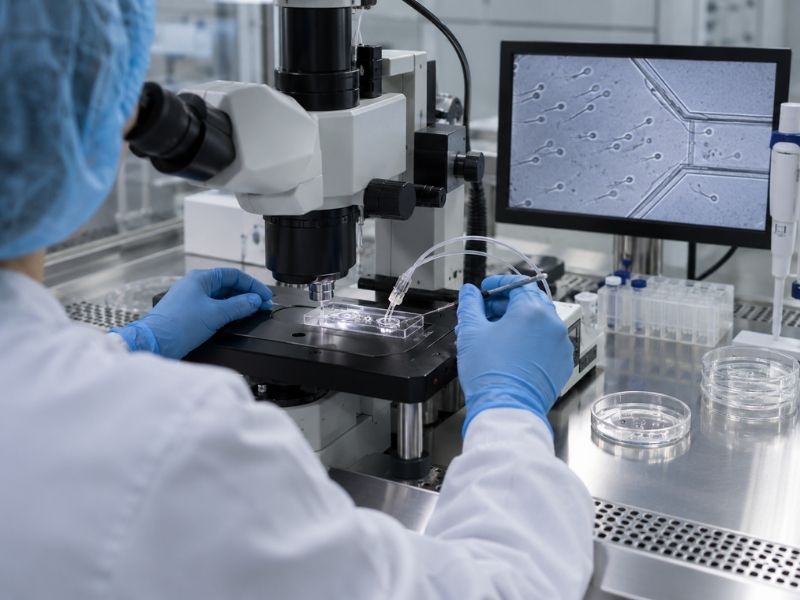
The microchip method is used in intrauterine insemination (IUI), the first treatment usually tried after a diagnosis of infertility. It is a successful method for selecting high-quality sperm during insemination and is preferred because it increases the pregnancy rate. Whereas sperm are normally selected by examining them under a microscope, in the microchip method they are selected with special devices. During this process, sperm with DNA damage are eliminated and the highest-quality sperm are separated out.
What Is Microchip Insemination?
The microchip method is used in infertility treatment and increases the chance of pregnancy for people who want to have a baby. Compared with standard insemination, microchip insemination selects the best-quality sperm, which increases the chance of pregnancy. In microchip insemination, the highest-quality sperm are identified and used for fertilization. Immotile sperm cells or those with damaged DNA are eliminated, and healthy sperm are selected. The microchip used in insemination, on the other hand, is used in cases where the sperm count is good.
Who Is Microchip Insemination For?
The microchip procedure is used for people with male-factor infertility. Male infertility is related to sperm quality. With the microchip procedure, the highest-quality sperm is obtained. Microchip insemination is performed for people who have been diagnosed with infertility and have poor sperm quality.
It is used in couples who have regular unprotected intercourse but cannot achieve a pregnancy, to select the highest-quality sperm from the man's sample. It may not be suitable for everyone diagnosed with infertility, so choosing the right patients is important. Proper sperm preparation, together with the right treatment and techniques, helps achieve success.
How Is the Microchip Method Performed?
In the microchip procedure, the sperm collected from the man are examined. This method uses special solutions, and these solutions also affect sperm quality and morphology. Sperm with abnormal morphology are separated out with this method. By separating the sperm in this way, the highest-quality ones are used in insemination or IVF. In the sperm selection methods normally used for insemination, a washing process is carried out, and the sperm can be damaged. With the microchip method, however, the sperm are selected without any of them being damaged.
Why Is the Microchip Method Preferred?
The microchip method is preferred because it is more successful at selecting the best sperm—the one most likely to achieve a pregnancy. Because the microchip method detects sperm DNA damage and allows better sperm to be selected, the chance of getting pregnant is high. During intercourse, millions of sperm are released into the vagina. The sperm that can pass through the mucus barrier of the cervix move toward the fallopian tubes. The most motile sperm with the best morphology fertilizes the egg and forms the embryo. Based on this natural selection of the best sperm, the microchip procedure also aims to select these good sperm. With the microchip method, the chance of pregnancy increases by 40%.
What Is the Difference Between a "Chip Baby" and IVF?
The "chip baby" and IVF methods go through similar stages but differ at one point. The difference between a "chip baby" and IVF is that the microchip method selects and injects the highest-quality sperm. Special devices and solutions are used at the sperm selection stage of the microchip method.
In IVF treatment, sperm are normally examined and selected under a microscope. Because this does not provide enough information about the sperm, the microchip method is considered more suitable. When sperm are selected with the microchip method, those with DNA abnormalities can also be detected. In this way, the sperm that will most increase the chance of pregnancy are selected.
What Are the Advantages of Microchip IVF?
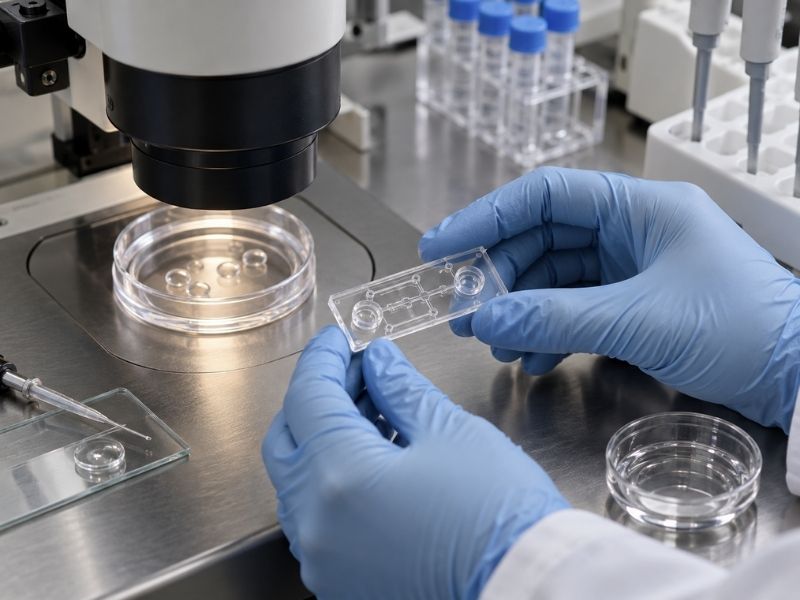
In microchip IVF, selecting near-natural sperm with the best DNA integrity using the microchip method, which is based on microfluidic technology, and then performing ICSI (intracytoplasmic sperm injection) can increase the chance of success. In ICSI during IVF, the microchip method allows selection both among a sufficient number of motile sperm and among poorly motile sperm. This helps bring a healthier baby into the world. It also helps both financially and emotionally by achieving results in a shorter time without repeated attempts.
Microchip Method Prices
Prices for the microchip method may differ from standard insemination because different materials are used. Special kits and solutions are used for the microchip method. This method was developed to separate higher-quality sperm from the rest. The microchip method increases the chance of pregnancy.