

The number of couples who want children and have difficulty conceiving is increasing day by day. Failure to achieve pregnancy after one year of unprotected intercourse is called "infertility" or "sterility." When infertility is diagnosed, both female and male factors must be investigated. More than half of infertility cases are due to male factors. Azoospermia, meaning the complete absence of sperm in the semen, accounts for only 1% of infertility cases.
In turn, 10–15% of male infertility is associated with azoospermia, that is, the "complete absence of sperm in the semen." Azoospermia can have more than one cause. Some causes can be treated and fertility can be restored, but others cannot be corrected and alternative solutions must be sought. Our goal is to find good-quality, viable sperm cells and create embryos through IVF so that couples can have a baby. Over the last 15 years, a decline in normal sperm values has been observed worldwide. According to the European Association of Urology, values of 15 million sperm/ml and above are considered normal.
What Is Azoospermia (Azospermia)?
The complete absence of sperm in the semen (seminal fluid, ejaculate) released from the male reproductive organs during ejaculation is called "azoospermia." It is quite difficult for men with an azoospermia diagnosis to have children naturally, because fertilization cannot occur without sperm. Azoospermia can arise from many different causes. In some cases azoospermia can be treated, while in others treatment may not be possible, and in that case pregnancy can be achieved using methods such as IVF.
What Are the Normal Values of a Semen Analysis (Spermiogram)?
Sperm production begins at puberty. Sperm count and function are important for fertility. A normal sperm count is 15 million/cc or more. Sperm count and motility can be affected by many diseases and conditions.
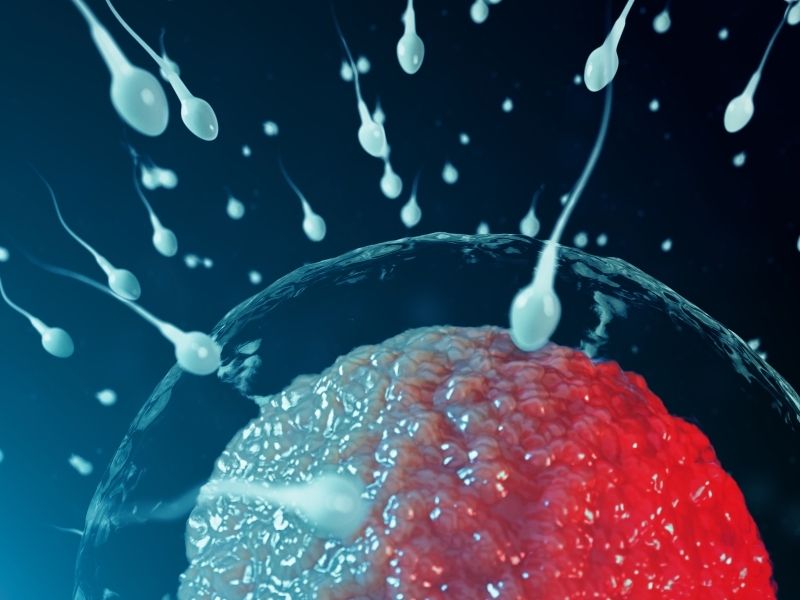
Men's sperm count is below 15 million/cc in "oligospermia," that is, "low sperm count." In azoospermia, there is no sperm in the semen at all. The presence of semen (ejaculate) does not mean that it contains sperm. When a semen analysis is performed, no sperm at all may be found in the semen.
Causes of No Sperm in the Semen
Azoospermia, the complete absence of sperm in the semen, can generally be attributed to two main causes: the obstructive type and the non-obstructive type.
Obstructive azoospermia refers to a condition in which sperm production takes place in the testicles but the sperm cells produced cannot be expelled through the ducts. When there is a blockage in the ducts that make up the reproductive system, such as the epididymis and vas deferens, sperm cells cannot mix with the semen. This blockage can be due to many different causes:
- Past infections
- A history of inflammation
- Trauma or injury
- Cyst formation
- Nerve damage
Permanent birth control surgery (vasectomy), in which the vas deferens is cut during the operation, preventing sperm from being released
Certain genetic disorders: For example, a cystic fibrosis gene mutation can cause the vas deferens not to form or to become blocked due to thick secretions.
In obstructive azoospermia, it is possible to have children through methods such as IVF; however, unless the underlying causes are treated, conceiving naturally is difficult.
Non-obstructive azoospermia refers to a condition in which sperm production in the testicles is insufficient or no sperm can be produced at all. This condition is usually caused by abnormalities in the structure or function of the testicle. We can list these causes as follows:
Genetic Causes
Klinefelter syndrome: In this condition, a man's chromosomes differ from normal, as XXY, which can lead to a lack of sexual maturation, physical problems, and learning difficulties.
Kallmann syndrome: This genetic disorder is associated with impaired sense of smell and can cause infertility if left untreated.
Y chromosome deletion: Missing parts of the Y chromosome, which is responsible for sperm production, can cause infertility.
Hormonal Disorders
- Hypogonadotropic hypogonadism
- Hyperprolactinemia
- Androgen resistance.
Retrograde Ejaculation
In this condition, semen can flow backward into the bladder.
Testicular Causes of Azoospermia
History of undescended testicles (cryptorchidism): The testicles may not have descended into the scrotum or may have been treated late; in this case, the testicles are affected by body temperature and the sperm inside them may lose their viability.
Absence of the testicles (anorchia).
Sertoli cell-only syndrome: The testicles cannot produce sperm.
Mumps affecting the testicle (mumps orchitis).
Tumors, cancer.
Testicular torsion: Twisting of the testicle around itself, which cuts off its blood flow and causes gangrene.
Certain medications or treatments: These can affect sperm production.
Radiation therapy and chemotherapy.
Chronic diseases: Such as kidney failure, cirrhosis, and diabetes.
Varicocele
A varicocele is an enlargement of the veins; a varicocele in the testicles can cause the testicles to be at a higher temperature and thus negatively affect sperm production.
What Should Be Done When Azoospermia Is Detected?
When there are no sperm cells in the semen, a detailed medical history should be taken from the patient. Factors such as past febrile illnesses, undescended testicles or testicular surgery, medication use, history of cancer treatment, occupation, chemical exposure, and smoking and alcohol use should be asked about.
Next, the patient should be examined and hormone tests should be performed. If no underlying cause can be found, a goal-oriented approach should be adopted and IVF should be used. The experience and quality of the obstetrician-gynecologist, the urologist, and the embryology laboratory are very important for the success of azoospermia treatment.
What Are the Symptoms of Azoospermia?
Male infertility first shows itself when a couple is unable to have a child despite one year of unprotected intercourse. This can lead to various emotional problems in men, such as depression, sadness, and feelings of failure. At this point, it is recommended to consult a specialist such as a psychiatrist and receive therapy if needed.
In azoospermia, the condition should be suspected when certain symptoms are present. These include symptoms associated with reduced testosterone production, such as fatigue, low sex drive, depression, weight gain, and apathy. In addition, although they are not specific to azoospermia, the following symptoms should also be taken into account:
- Decreased sex drive
- Thinning of body hair and scalp hair
- Swelling around the reproductive organ or swelling in the scrotum
- Tenderness in the reproductive organs
- Abnormal discharge from the penis
If you or your partner notices any of these symptoms, it is important to see a specialist to have the condition evaluated. In particular, seeking support from a urologist who specializes in male infertility or reproductive endocrinology can be beneficial.
How Is Azoospermia Diagnosed?
A semen analysis (spermiogram) is a sperm test that examines the presence, motility, and viability of sperm by analyzing the semen a man provides through ejaculation. After the semen sample is collected, it undergoes special processing in the laboratory, is centrifuged, and is then examined under a microscope. Azoospermia can be diagnosed after semen analysis, but for this diagnosis it is generally more accurate to perform the semen analysis twice at two different times. In addition, further tests such as genetic tests, hormone tests, urinalysis, and testicular biopsy may be performed to aid the diagnosis and treatment process. Once the cause of azoospermia has been determined, it is important to consult a specialist urologist for treatment planning.
Azoospermia Treatment
Azoospermia can be caused by many diseases. Some of these conditions can be treated, but others cannot. The evaluation by an obstetrician-gynecologist and the examination by a urologist are very important
Because the causes of no sperm in the semen in azoospermia vary from person to person, to find the cause the urologist must first take a detailed medical history from the patient. The patient's previous operations (especially on the testicles), past infections, and genetic predisposition are important. The urologist should then perform a physical examination of the patient.
If the underlying disease causing azoospermia is known, this disease should be treated first. If there are blockages in the ducts, these blockages can be opened surgically.
If sperm cannot be released from the testicles because of nerve damage, medication or surgery for the nerve damage may be performed.
If levels of LH (luteinizing hormone) and FSH (follicle-stimulating hormone), which are secreted by the pituitary gland and contribute to sperm production, are reduced, sperm production can be achieved with hormone therapy.
However, if there is a cause that cannot be treated, or if the cause of azoospermia could not be found, sperm can be retrieved from the patient surgically (sperm production can be achieved).
In men in whom no sperm at all is found on semen analysis (spermiogram) and who are diagnosed with azoospermia, sperm can be obtained surgically, since the goal is to have a child. However, the patient should first be examined by a urologist, and the decision on surgery should be made afterward. The urologist will decide on the type of treatment according to the patient's condition and sperm count. For sperm retrieval, TESA (testicular sperm aspiration), TESE (testicular sperm extraction), Micro-TESE, PESA, ICSI (microinjection), and MESA methods may be used.
In the Micro-TESE method, testicular tissue removed during surgery is examined in detail under a microscope, and tissue with the potential to produce sperm can be identified. Sperm are found in approximately 50–60% of patients after Micro-TESE. In patients in whom sperm are found, embryos are created through IVF, or the sperm can be frozen for future use — that is, "sperm freezing" can be performed. In patients in whom no sperm is found with Micro-TESE, this tissue can be examined in detail, or the Micro-TESE procedure can be attempted again after 6 months.
For men in whom no sperm can be found despite all treatments, "stem cell therapy" holds promise, although it has not been proven.
Tests Used in Azoospermia Treatment
To make an azoospermia diagnosis, a sperm test, that is, a semen analysis (spermiogram), must be performed. Azoospermia should be diagnosed with a semen analysis performed on at least 2 different occasions. The tests that may be ordered after azoospermia is diagnosed are listed below:
- Blood hormone tests (FSH, LH, prolactin, testosterone, etc.)
- Genetic tests
- Ultrasound to detect abnormalities in the reproductive system (transrectal ultrasound, testicular ultrasound, or Doppler ultrasound)
- Brain imaging (if pituitary disorders are suspected)
- Testicular biopsy (when necessary)
How Can Azoospermia Be Prevented?
Considering the causes of azoospermia, it is not possible to prevent genetic diseases; however:
- Protect yourself from infections such as mumps and their effects,
- If a newborn has an undescended testicle, it should be addressed and treated early,
- If there is a varicocele in the testicles, see a urologist for an examination and have surgery if necessary,
- Stay away from radiation and chemicals,
- Do not smoke,
- Avoid medications that can harm sperm production,
- Avoid environments that expose your testicles to high heat,
- Avoid activities that could harm your reproductive organs.
What Is Cryptozoospermia?
In patients diagnosed with azoospermia, sperm cells can be detected in rare cases with consecutive semen analyses (samples taken twice on the same day). These sperm cells can be frozen and used in IVF treatment. This condition, called cryptozoospermia, refers to sperm cells occasionally being found in patients with azoospermia.
To capture these rare sperm cells, patients need to patiently have semen analyses at intervals, and the samples must be examined carefully in the laboratory. Instead of a simple semen analysis, detailed testing should be performed in experienced laboratories to accurately detect cryptozoospermia.
What Is Varicocele Treatment?
A varicocele is an "enlargement of the veins." Enlarged veins mean higher heat. When this vein enlargement occurs in the male reproductive organ (the testicles), the high heat can impair sperm function, count, and quality. After varicocele surgery, azoospermia can be treated and sperm count and quality can improve.
Azoospermia Treatment Costs
Azoospermia is a condition that causes male infertility and prevents having children if left untreated. Because the cost of azoospermia treatment depends on many variables, it is difficult to give an exact figure. Since azoospermia has various causes, treatment options also vary. For example, surgical procedures such as micro-TESE as well as any medications that may be recommended can affect the cost and may require a different cost estimate for each couple. The right approach is to evaluate each couple's situation individually and determine the most appropriate treatment plan based on scientific evidence. In this way, the treatment process is managed as effectively and appropriately as possible. Together with the specialist urologists on her team, Prof. Dr. Çiğdem Yayla Abide provides high-quality, top-level care and performs treatments and IVF procedures.
Azoospermia is a condition that causes infertility in men and means the complete absence of sperm in the semen. This condition can reduce a couple's chances of having children and may require treatment. Factors such as genetic disorders, hormonal imbalances, and varicocele can lead to azoospermia. Treatment options vary depending on the individual situation, and surgery may be required in some cases. Sperm can be obtained with methods such as micro-TESE, and having a child can be possible with IVF treatment. However, since each patient's situation is different, the treatment plan should be individualized. It is important to work with a specialist team during the treatment process.